
The Japanese Head Spa trend has officially taken the global wellness industry by storm. As social media platforms like TikTok and Instagram amplify the sensory and therapeutic benefits of “scalp facials,” savvy entrepreneurs are looking for ways to enter this lucrative niche. For many, the most accessible entry point is through a salon suite. Starting a Spa business within a limited footprint offers low overhead and high creative control, but it presents a unique technical challenge: plumbing.
Traditionally, a head spa requires complex water hookups for the signature “water halo” effect. However, innovations in salon furniture and portable water systems have made it possible to launch a premium head spa without expensive renovations. This guide explores how to strategically plan, equip, and market your head spa within a salon suite, ensuring you provide a top-tier experience that builds long-term authority in the wellness sector.
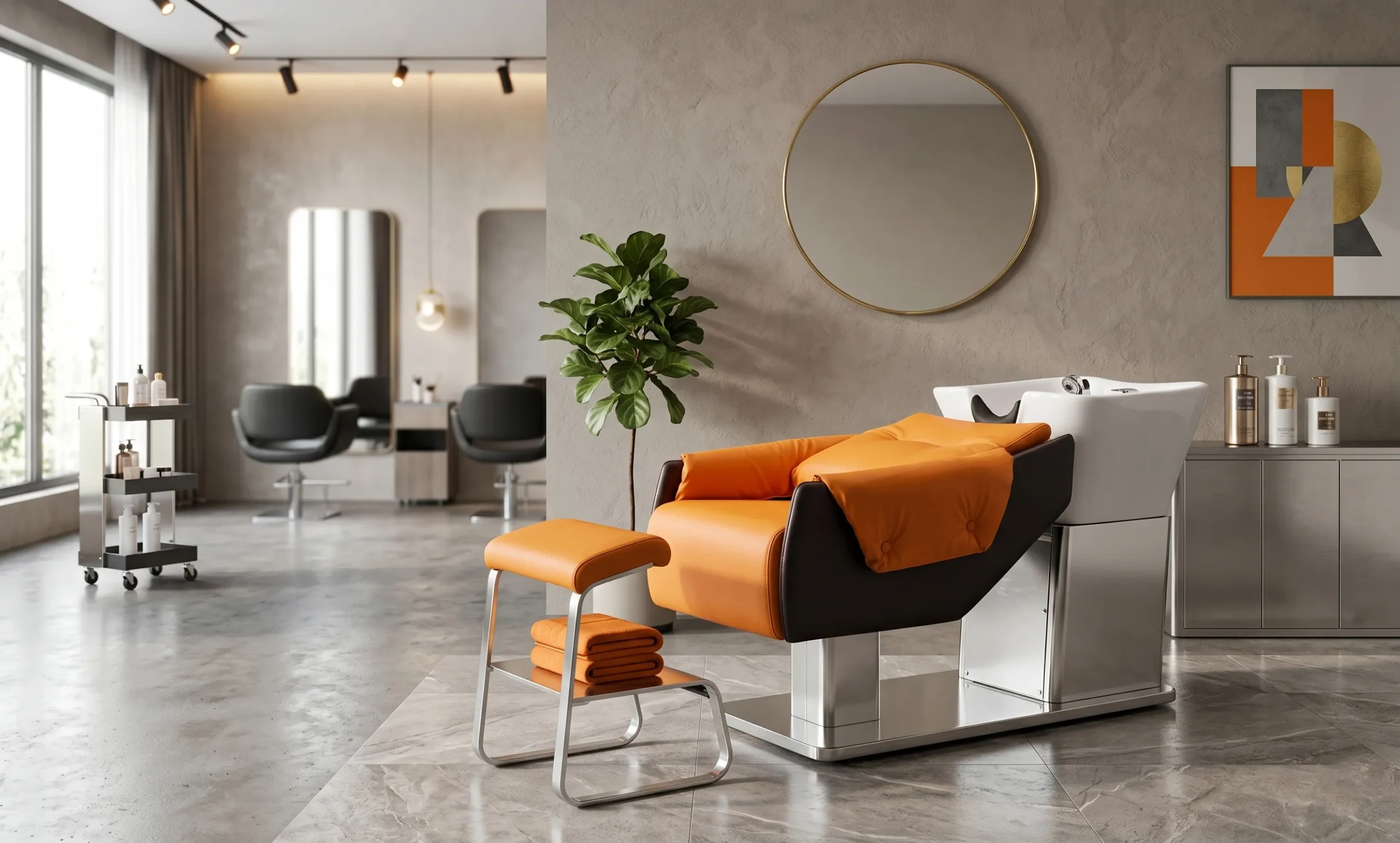
The Head Spa Market: Why It’s a Winning B2B Opportunity
The scalp care market is no longer a sub-segment of hair styling; it is a burgeoning pillar of the “Skinification of Hair” movement. According to industry reports from Grand View Research, the global scalp treatment market is experiencing a double-digit compound annual growth rate (CAGR). For an independent professional, launching a Spa business focused on trichology (the study of hair and scalp) allows for premium pricing and high client retention.
Why the Salon Suite Model Works
Salon suites—individualized spaces within a larger building—have become the preferred choice for modern beauty professionals.
- Low Capital Expenditure: You avoid the high costs of leasing a full-scale building and managing multiple staff members.
- Intimacy: The head spa experience is inherently private and meditative. A closed-door salon suite naturally enhances the “Zen” atmosphere required for the service.
- Niche Focus: In a suite, you can specialize entirely in scalp health, positioning yourself as an expert rather than a generalist.
Solving the Plumbing Dilemma: The No-Plumbing Revolution
The single biggest barrier to starting a head spa in a suite is the lack of additional floor drains or water lines. Traditional salon suites are usually pre-equipped with one standard sink. Expanding this for a head spa setup often violates lease agreements or requires thousands of dollars in plumbing work.
Enter the Integrated Portable System
The game-changer for the modern Spa business is the self-contained head spa system. These units feature integrated water tanks (clean and waste) and quiet, high-pressure pumps.
- Plug-and-Play: These systems only require a standard electrical outlet.
- Heated Water: High-end units include built-in heaters to ensure the “water halo” remains at a constant, relaxing temperature.
- Filtration: Many portable systems include multi-stage filters to ensure that the water touching the client’s scalp is free of chlorine and heavy metals, enhancing the therapeutic value of the treatment.
Essential Equipment: Selecting the Right Salon Bed
In a head spa, the client remains in a reclined position for 60 to 90 minutes. Therefore, the choice of a salon bed is the most critical decision for your suite’s setup. It must bridge the gap between a traditional shampoo chair and a high-end massage table.
Ergonomics for Scalp Therapy
A standard facial bed won’t suffice because it lacks the integrated basin and neck support necessary for water-based treatments. When searching for the perfect salon bed for a head spa, prioritize the following:
- Integrated Basin: The sink must be seamlessly built into the head section to prevent water leakage and ensure client comfort.
- Memory Foam Padding: Since the service is long, high-density memory foam is essential to prevent client fatigue.
- Adjustable Height: To protect your own health as a practitioner, the bed should be height-adjustable to ensure you can reach the scalp without straining your back or shoulders.
Space Optimization: Designing a “Zen” Retreat in a 100-sq-ft Suite
Operating a Spa business in a salon suite requires a masterclass in space management. Most suites range from 100 to 150 square feet. Within this footprint, you must accommodate your treatment bed, storage for specialized scalp serums, a scalp analysis station, and a small preparation area.
Creating a Multi-Sensory Environment
Because the head spa experience is centered on “ASMR” and deep relaxation, your suite’s design must compensate for its size through sensory detail.
- Lighting: Avoid the harsh overhead LEDs standard in many suites. Use dimmable warm lighting or smart bulbs to create a sunset hue during the water-based portion of the service.
- Soundscapes: Soundproofing is often a challenge in shared suite buildings. Invest in high-quality acoustic panels or a specialized white-noise machine to mask the sound of blow-dryers from neighboring suites.
- Aroma: Scalp treatments often involve essential oils. Ensure your suite has proper ventilation while maintaining a signature scent that defines your brand.
The Technical Core: Choosing a Specialized Salon Bed
In a traditional salon, a shampoo bowl is a separate fixture. In a head spa suite, the salon bed is the all-in-one workstation. For a no-plumbing setup, you need a unit where the basin and the bed are integrated into a single, cohesive frame that hides the internal water tanks and pumps.
Key Specifications for B2B Procurement
Technical Feature
Traditional Shampoo Chair
Portable Head Spa Salon Bed
Strategic Benefit
Water Source
Fixed Plumbing
Self-Contained Tanks (Clean/Waste)
Zero renovation costs; fast setup.
Positioning
Upright/Slight Tilt
Fully Reclined (180°)
Maximizes relaxation for 90-min sessions.
Water Features
Standard Spray Head
“Water Halo” & Steam Integration
Allows for the signature “Head Spa” ritual.
Space Footprint
Requires separate sink area
All-in-one Integrated Unit
Perfect for 100-sq-ft salon suites.
Ergonomics: The Professional’s Edge
As a Spa business owner, you will be spending hours leaning over the basin. A high-quality salon bed designed for head spas features a “neck relief” system—usually a gel-filled support that suspends the client’s head, allowing you to reach the back of the scalp without the client feeling the hard edge of the basin. This also prevents water from leaking onto the client’s clothes, a common issue in poorly designed portable units.
Crafting Your Signature Service Menu
To establish authority in your niche, your services should go beyond just “washing hair.” In 2026, clients are looking for clinical results combined with spa-like luxury. Your menu should reflect a “Trichology-first” approach.
- Scalp Detoxification: Using micro-camera technology (Scalp Analysis) to show the client their follicle health before and after the treatment.
- Thermal Steam Therapy: Using a specialized steam hood integrated with the salon bed to open pores and enhance the absorption of herbal treatments.
- The Water Halo Ritual: The visual and auditory centerpiece of the head spa. The continuous, circular flow of warm water over the forehead and scalp triggers the parasympathetic nervous system.
ROI Analysis: The Economics of the Suite-Based Head Spa
One of the most attractive aspects of starting this Spa business is the high ticket price versus the low consumable cost.
- Average Service Price: $120 – $250 per 90-minute session.
- Consumable Cost: $5 – $12 per client (shampoos, oils, steam water).
- Occupancy Cost: Fixed suite rent (typically $250 – $500/week).
By bypassing the $5,000–$10,000 plumbing renovation cost, a suite-based professional can achieve break-even on their equipment investment (portable salon bed and initial supplies) within 3 to 5 months, assuming a modest booking rate of 10 clients per week. This makes the “no-plumbing” model one of the most financially resilient entry points into the wellness industry today.
Navigating Regulations and Hygiene Protocols
Operating a Spa business within a salon suite requires strict adherence to local cosmetology and health department regulations. When using a “no-plumbing” system, sanitation becomes your top priority to maintain professional credibility and client safety.
Water Management and Sanitation
Because you are utilizing internal tanks, you must establish a rigorous daily protocol. In accordance with EPA water quality standards, the clean water tank should be emptied and sanitized daily to prevent bacterial growth.
- Waste Water Disposal: Waste water must be disposed of in a designated sanitary drain (usually the main salon suite sink). Never leave greywater in the tank overnight.
- Basin Sterilization: The basin of your salon bed should be cleaned with hospital-grade, EPA-registered disinfectants between every client, specifically focusing on the neck rest and the water halo nozzles.
State Board Compliance
Before purchasing your equipment, verify with your local State Board of Cosmetology if portable sinks are permitted for head spa services in your jurisdiction. Many states have updated their codes to allow self-contained units, provided they meet specific capacity and heating requirements. Ensuring your salon bed is CE or UL certified will also help in passing safety inspections.
Marketing Your Head Spa in 2026: The “Scalp-First” Strategy
The beauty of a niche Spa business is that it is highly “Instagrammable.” To fill your books in a salon suite, your marketing should focus on the intersection of clinical results and sensory relaxation.
Leveraging Micro-Aesthetics
Invest in a high-definition scalp camera. Sharing “Before and After” images of a congested scalp versus a clean, detoxified follicle is one of the most effective ways to convert followers into paying clients. This visual proof establishes your authority and justifies the premium pricing of a head spa service.
Targeting the “Self-Care” Demographic
In 2026, wellness is viewed as a holistic necessity. Position your suite as an “escape” from the digital noise. Use video content that highlights the auditory experience—the sound of the water halo, the steam rising from the salon bed, and the rhythmic scalp massage. This ASMR-style marketing is proven to drive high engagement in the wellness sector.
Final Checklist for Launching Your Head Spa Suite
To ensure a smooth opening, use this final B2B procurement and operational checklist:
- Equipment: Secure a high-quality, integrated head spa salon bed with a no-plumbing water system.
- Inventory: Source professional-grade scalp oils, exfoliating scrubs, and pH-balanced shampoos.
- Ambience: Install acoustic panels, dimmable lighting, and a high-quality Bluetooth speaker for meditative soundscapes.
- Administrative: Set up an online booking system that allows for “add-on” services (like blow-outs or deep conditioning).
- Insurance: Obtain professional liability insurance that specifically covers scalp treatments and spa services.
Conclusion: The Future of Boutique Wellness
Starting a head spa Spa business in a salon suite is a high-reward, low-risk strategy for the modern entrepreneur. By eliminating the need for expensive plumbing and utilizing a specialized, integrated salon bed, you can focus your capital on branding and client experience. As the industry moves toward hyper-specialized “Scalp Clinics,” those who secure their space in the salon suite market now will be positioned as leaders in the next evolution of the beauty industry.
Frequently Asked Questions (FAQ)
Q: Is it really possible to run a head spa without plumbing?
Yes. By using a specialized salon bed with an integrated, self-contained water system, you can provide a full head spa experience including the “water halo” effect using only a standard electrical outlet for power and manual water replenishment.
Q: How long does it take to set up a head spa in a salon suite?
If you choose a portable, integrated unit, setup can take as little as 24-48 hours. Once the salon bed is delivered and your suite is decorated, you are essentially ready to begin treating clients.
Q: What is the most important feature of a head spa bed?
Beyond the water system, the “neck comfort” is paramount. Since treatments last 60-90 minutes, the salon bed must have a professional ergonomic neck support to prevent client discomfort and water leakage.
Q: Can I offer traditional hair coloring in the same suite?
While possible, it is not recommended for a “no-plumbing” setup. Rinsing heavy hair color requires significant water volume and may stain the specialized basins used in head spas. It is best to focus on scalp health and detoxification.