
In the competitive landscape of the B2B wellness and aesthetic industry, space optimization and cost-efficiency are no longer just “nice-to-haves”—they are operational imperatives. For spa owners, clinic directors, and salon entrepreneurs, the question of whether a single multi-functional spa bed can effectively support facials, waxing, and intensive body treatments is central to their procurement strategy.
The short answer is: Yes, but with critical caveats. Not every bed is engineered to handle the divergent physical demands of a delicate micro-needling facial and a high-pressure deep tissue massage. Selecting the wrong equipment can lead to practitioner fatigue, patient discomfort, and frequent maintenance costs. This comprehensive guide explores the technical requirements, ergonomic standards, and ROI considerations of investing in an all-in-one electric beauty bed for your practice.
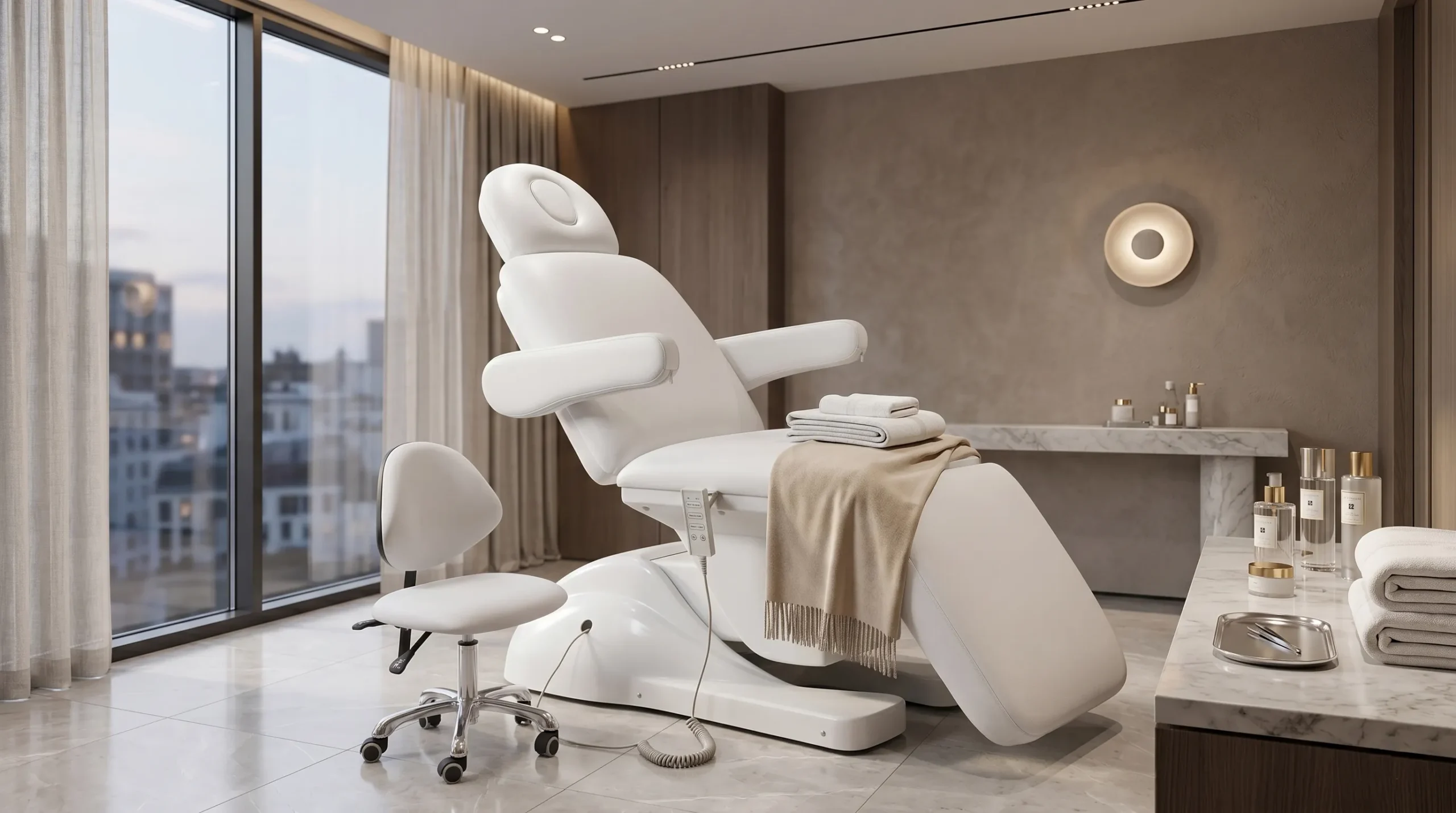
The Rise of the All-in-One Treatment Room
Modern spa design is moving away from hyper-specialized rooms toward “flexible treatment suites.” This shift is driven by the need to maximize revenue per square foot. According to industry insights from the International Spa Association (ISPA), versatile treatment spaces allow facilities to adapt to fluctuating booking trends without leaving specialized rooms vacant.
To achieve this flexibility, the spa bed must serve as the “Swiss Army Knife” of the facility. It needs to be stable enough for vigorous body work, adjustable enough for precision aesthetic procedures, and comfortable enough for 90-minute relaxation sessions. Before diving into the technical specifications, it is essential to understand that a “one-size-fits-all” approach requires a high-end, professionally engineered piece of equipment, rather than a budget-entry model.
Requirements for Facial Treatments: Precision and Access
Facials and advanced aesthetic procedures require the practitioner to have close, unobstructed access to the client’s head, neck, and décolletage. When evaluating if a versatile beauty bed can handle these tasks, focus on the following features:
Ergonomic Headrest and Face Cradles
A standard massage table often has a fixed or simple plug-in face cradle. For high-end facials, you need an integrated, adjustable headrest. Many modern adjustable spa table designs feature a “tapered” top or a removable pillow that reveals a breathing hole. This allows the client to lie prone (face down) for the back portion of a ritual facial, then flip over for the facial itself with proper neck support.
Range of Motion: The 90-Degree Shift
Unlike body treatments, many facials are performed while the client is in a semi-reclined or fully seated position. A high-quality medical-grade facial chair must be able to transition smoothly from a flat 180° to a 75° or 90° angle. This is crucial for:
- Chemical peels and extractions (better visibility for the esthetician).
- Post-treatment consultations.
- Treating clients with respiratory issues or acid reflux who cannot lie flat.
Legroom for the Practitioner
One of the most overlooked aspects of B2B equipment procurement is the “base” design. If the base of the beauty bed is too bulky, the esthetician cannot slide their knees under the table while sitting on a stool. This leads to chronic back pain and reduced precision. Look for a “pedestal” or “column” base design which offers maximum legroom for seated work.
Requirements for Waxing: Sanitation and Stability
Waxing treatments present a different set of challenges—primarily hygiene and physical leverage. Can your facial bed handle the “tug” of a Brazilian wax or the mess of a full-leg service?
Height Adjustability and Speed
Waxing is a fast-paced, high-turnover service. The professional spa furniture you choose must have a reliable motor system (ideally a 3-motor or 4-motor system). The height needs to be adjusted quickly so the therapist can work at the correct hip level, whether they are waxing an eyebrow or an ankle. Manual height adjustment is a major bottleneck in a busy waxing schedule.
Upholstery Durability: The Wax-Resistant Factor
Waxing involves heat and chemicals. A multi-functional bed must be equipped with medical-grade upholstery (such as high-quality PU leather) that is:
- Oil-resistant and wax-resistant.
- Easy to sanitize with hospital-grade disinfectants without cracking or discoloring.
- Equipped with seamless transitions to prevent wax from dripping into the internal foam.
Firmness vs. Softness
While body treatments benefit from plush padding, waxing requires a firmer surface. If the foam is too soft, the skin “sinks,” making it harder to pull the wax strips effectively and increasing client discomfort. A high-density, multi-layer foam system is the best middle ground for a bed that supports both facials and waxing.
Requirements for Body Treatments: Stability and Pressure
Body treatments, ranging from Swedish massages to intensive body wraps and scrubs, demand the highest level of structural integrity. If a spa bed is marketed as “multi-functional,” it must pass the rigorous stability test required for manual therapy.
Dynamic vs. Static Weight Capacity
In the B2B procurement sector, it is vital to distinguish between static weight (the weight the bed holds while still) and dynamic weight (the pressure applied by a therapist during a deep-tissue massage). For a bed to safely support body treatments, it should ideally have a lifting capacity of at least 400-500 lbs. This ensures that the electric massage table won’t wobbles or squeak when the practitioner applies downward force—a common flaw in lower-end models.
Width and Lateral Stability
Facial chairs are often narrower (24-27 inches) to allow the esthetician to get closer to the face. However, body treatments require a wider surface (usually 29-32 inches) so the client’s arms don’t fall off the sides. High-end versatile beds often solve this by including removable side armrests or “expandable” wings. This allows the bed to be narrow for facials and wide for massages, maintaining optimal ergonomics for both scenarios.
Breathing Holes and Face Cradles
For body treatments where the client is prone for 45-60 minutes, the integrated face hole must be ergonomically designed. According to FDA guidelines for medical-grade furniture, pressure distribution is key to preventing skin irritation and ensuring safety. A multi-functional bed should feature a recessed face hole with a “plug” that fits perfectly flush when the bed is used for facials.
Comparing Equipment: Standard vs. Multi-Functional Professional Beds
To help clinic owners make an informed decision, the following table compares a standard entry-level bed with a professional-grade multi-functional beauty bed.
Feature
Standard Facial Bed
Professional Multi-Functional Bed
Impact on Business
Motor System
1 Manual or 1 Electric
3-4 Quiet Linear Actuators
Faster transitions; less manual labor for staff.
Adjustment Range
Limited (Backrest only)
Height, Back, Leg, and Trendelenburg
Allows for medical-grade procedures and better ergonomics.
Stability
Moderate (May wobble)
High-Strength Steel Frame
Crucial for deep tissue massage and patient safety.
Client Comfort
Thin PVC / Standard Foam
Medical PU Leather / Memory Foam
Higher client retention and “premium” feel.
Versatility
Facials/Waxing only
Facials, Waxing, Massage, Med-Spa
Maximizes room revenue per hour.
The Technical Engine: Why Motor Count Matters
When searching for the ideal treatment table, the number of motors is the most significant technical differentiator. In a B2B context, the motor count dictates the level of service you can provide.
- 1-Motor Beds: Usually only control height. Backrest and leg adjustments are manual. These are often insufficient for a busy multi-service room.
- 3-Motor Beds: Control height, backrest, and leg tilt. This is the “gold standard” for a versatile treatment table. It allows you to transition a client from a lying position to a seated position at the touch of a button.
- 4-Motor Beds: These add a “seat tilt” or “Trendelenburg” function. This is particularly useful for advanced medical facials, injectables, or when treating clients with circulation issues, as it allows the feet to be elevated above the heart.
ROI Analysis: The Business Case for One Bed
From a facility management perspective, investing in a high-quality electric beauty bed that handles all three treatments (Facials, Waxing, Body) significantly reduces the “Cost of Vacancy.”
“The most expensive square foot in a spa is an empty one. By utilizing multi-functional equipment, a 100-sq-ft room can generate revenue through an $80 waxing session at 10:00 AM and a $250 advanced facial at 11:00 AM without any downtime for equipment swapping.”
Furthermore, specialized professional spa furniture reduces the risk of Work-Related Musculoskeletal Disorders (WMSDs) among staff. According to ergonomic studies in the wellness sector, beds that lack height adjustability are the leading cause of carpal tunnel and lower back injuries for therapists. Protecting your human capital is just as important as protecting your equipment investment.
Aesthetics and Brand Identity
In the luxury B2B market, the spa bed is the centerpiece of the room. A sleek, modern design with hidden cables and a minimalist base signals high-end professionalism to your clients. When one bed does it all, the room looks less cluttered, creating a “Zen” environment that is essential for the modern spa experience. High-quality medical-grade upholstery not only lasts longer but also feels superior to the touch, reinforcing your brand’s commitment to quality.
Longevity and Maintenance: Protecting Your Investment
A high-quality beauty bed is a significant capital expenditure. For B2B buyers, the “Total Cost of Ownership” (TCO) includes not just the purchase price, but the cost of maintenance and the potential loss of revenue due to equipment downtime. To ensure your multi-functional bed remains a top-performing asset for 5-10 years, follow these industry best practices:
Upholstery Care
While modern medical-grade upholstery is designed to be durable, harsh chemicals can degrade the material over time. Avoid using high-alcohol-content cleaners which can cause “crazing” (tiny cracks) in the PU leather. Instead, use pH-neutral, hospital-grade disinfectants recommended by the manufacturer. Using protective spa bed covers or disposable paper rolls during waxing services will also prevent permanent staining.
Motor and Actuator Health
The silent linear actuators that power your electric beauty bed are the heart of the machine. Encourage staff not to exceed the weight limit and to ensure the bed is not obstructed when moving. A quarterly check-up to ensure all bolts are tightened and the height-adjustment track is clear of debris (like wax or massage oil) can prevent costly motor burnouts.
Decision Guide: Is a Multi-Functional Bed Right for You?
Before finalizing your procurement, use this checklist to verify if the model you are considering can truly handle facials, waxing, and body treatments simultaneously:
- Does it have a 3-motor or 4-motor system? (Critical for adjustability).
- Is the base a “pedestal” style? (Critical for facialist ergonomics).
- Is the foam high-density (3-4 inches)? (Critical for massage stability).
- Does it include removable headrests and armrests? (Critical for versatility).
- Is the warranty period 2+ years for electrical components? (Critical for B2B reliability).
Conclusion: The Verdict on Versatility
Can one spa bed support facials, waxing, and body treatments? The answer is a definitive yes, provided that you prioritize structural stability, motor-driven adjustability, and ergonomic design. For a B2B operator, the efficiency of a multi-purpose room far outweighs the initial higher cost of a premium, multi-functional bed. By choosing equipment that satisfies the technical needs of both the esthetician and the massage therapist, you create a more agile, profitable, and professional wellness environment.
Frequently Asked Questions (FAQ)
Q: Can I use a standard massage table for facials?
While possible for basic services, standard massage tables often lack the necessary legroom for seated practitioners and the upright tilt required for professional aesthetic procedures and consultations. A dedicated beauty bed is recommended for high-end clinics.
Q: How often should I sanitize my multi-functional spa bed?
In accordance with CDC guidelines for disinfection, the surface should be cleaned between every client. Use a non-abrasive, non-corrosive disinfectant to maintain the integrity of the medical-grade PU leather.
Q: What is the benefit of a 4-motor bed over a 3-motor bed?
The 4th motor usually controls the “seat tilt” (Trendelenburg position). This allows you to tilt the entire bed backward, which is essential for certain medical-spa treatments, injectables, and enhancing client comfort during long sessions by relieving lower back pressure.
Q: Is memory foam better for treatment beds?
For long treatments (over 60 minutes), memory foam provides superior pressure relief. However, for waxing and certain manual therapies, a layer of high-density support foam beneath the memory foam is necessary to prevent the client from “sinking” too far, which can hinder the practitioner’s leverage.