
In the highly competitive beauty and wellness industry, salon owners are constantly evaluating ways to enhance the client experience and modernize their aesthetics. However, beneath the polished surfaces of high-end manicure tables lies a critical operational factor that directly dictates the long-term viability of your business: indoor air quality. For B2B salon operators, independent nail technicians, and franchise managers, understanding the intricacies of proper ventilation is no longer a luxury—it is an occupational health necessity and a strict regulatory mandate.
Every day, nail technicians are exposed to a potent cocktail of volatile organic compounds (VOCs) and microscopic particulate matter. Without specialized infrastructure, these airborne contaminants linger in the breathing zone, posing severe respiratory risks to both staff and clientele. This comprehensive guide explores the critical importance of proper salon manicure table airflow, the science behind effective extraction systems, and why upgrading your workspace to include integrated ventilation is the smartest business decision you can make.
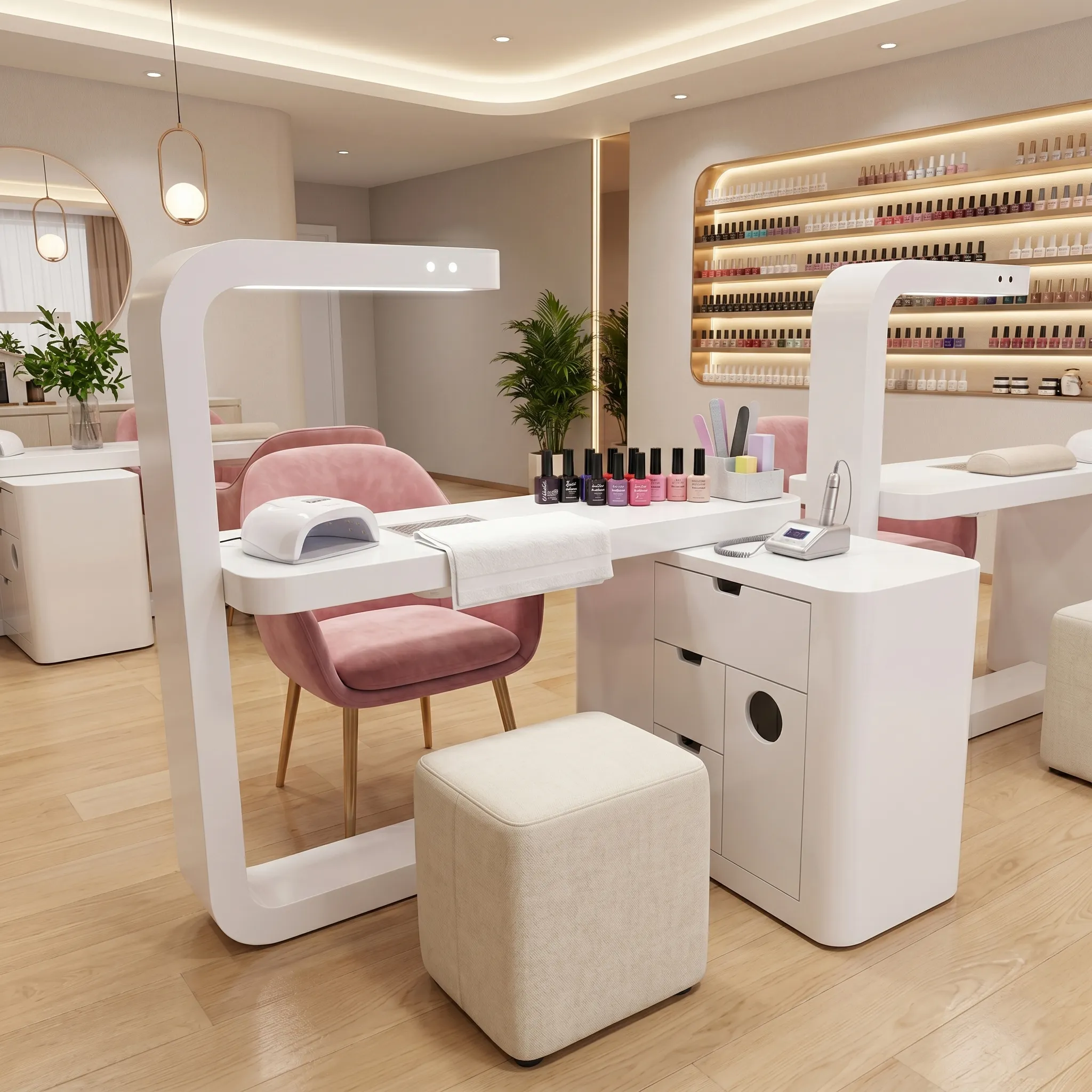
The Invisible Threat: Chemical Fumes and Nail Dust
To understand why specialized salon manicure table air quality management is crucial, we must first examine the specific hazards generated during routine nail services. The application and removal of acrylics, gels, polishes, and adhesives release distinct types of airborne pollutants that standard HVAC systems are completely unequipped to handle.
Volatile Organic Compounds (VOCs) in Daily Operations
The nail industry relies heavily on chemical formulations that evaporate at room temperature. The most notorious of these are often referred to as the “Toxic Trio”: toluene, formaldehyde, and dibutyl phthalate (DBP). Furthermore, the application of acrylic nails utilizes liquid monomers, primarily ethyl methacrylate (EMA). When these substances cure, they release intense acrylic nail fumes that can cause acute symptoms such as headaches, dizziness, and irritation of the eyes and throat.
Prolonged exposure to these VOCs without adequate atmospheric dilution can lead to chronic respiratory conditions, neurological issues, and long-term allergic sensitization. According to the Occupational Safety and Health Administration (OSHA) guidelines for nail salons, proactive extraction of these chemical vapors at the source is the most effective method to mitigate occupational exposure.
The Dangers of Inhalable Particulate Matter
Beyond chemical vapors, the physical filing, shaping, and drilling of artificial and natural nails produce massive quantities of fine dust. This particulate matter often measures less than 10 microns in diameter (PM10 and PM2.5), allowing it to bypass the body’s natural defense mechanisms and penetrate deep into the lungs. This dust acts as a carrier for residual unreacted chemicals, bacteria, and fungal spores, compounding the respiratory risk.
Why Investing in Vented Manicure Table is Essential
Addressing these airborne hazards requires more than just opening a window or running a standard ceiling fan. It requires purpose-built equipment designed specifically for the unique environment of a nail studio.
Safeguarding Technician and Client Health
Your nail technicians are the lifeblood of your salon. When technicians suffer from occupational asthma, contact dermatitis, or chronic fatigue due to poor air quality, businesses face increased absenteeism, high turnover rates, and escalating worker’s compensation claims. Implementing professional ventilation for manicure table ensures that the breathing zone—the two-foot radius around the worker’s and client’s faces—remains free of toxic accumulations.
Furthermore, the modern consumer is highly health-conscious. A salon that smells overwhelmingly of monomer or is visibly coated in a layer of fine dust instantly loses credibility. Providing a clean, odorless environment is a powerful marketing tool that builds client trust, encourages repeat bookings, and justifies premium pricing for your services.
Navigating OSHA and IMC Compliance
Regulatory bodies strictly monitor occupational exposure to hazardous chemicals. Depending on your jurisdiction, the International Mechanical Code (IMC) mandates specific exhaust rates for nail salons (often requiring direct exterior exhaust systems). Failure to comply with these local health department and building code regulations can result in severe fines, forced closures, and devastating legal liabilities.
Types of Extraction Systems for Salon Environments
Not all purification methods are created equal. When sourcing furniture and equipment for your B2B enterprise, understanding the mechanical differences between extraction systems is vital for ROI.
Source Capture Ventilation: The Industry Gold Standard
The most effective strategy recommended by industrial hygienists is source capture ventilation. This technology works by pulling contaminants away from the technician and client at the exact point of generation, before they can enter the ambient room air. This is the underlying principle behind high-quality, specialized salon furniture.
Downdraft Manicure Tables vs. Ambient Air Purifiers
Many salon owners mistakenly believe that standalone HEPA air purifiers placed in the corner of the room are sufficient. While these improve general air circulation, they allow fumes and dust to cross the technician’s breathing zone before being filtered. In contrast, downdraft manicure tables feature integrated suction grilles built directly into the work surface. As the technician files or applies product, the heavy dust and sinking chemical vapors are immediately pulled downward into a robust filtration system or exhausted directly outside.
To illustrate the operational differences, consider the following technical comparison:
Feature
Standard Table + Room Purifier
Integrated Vented Manicure Table
Extraction Point
Ambient room air (post-exposure)
At the work surface (pre-exposure)
Dust Management
Dust settles on surfaces and clothing
Captures up to 99% of dust at the source
Odor Control
Dilutes odors slowly over time
Neutralizes chemical vapors instantly
Client Experience
Noticeable chemical smell, noisy purifiers
Odorless environment, localized quiet operation
Regulatory Compliance
Often insufficient for stringent state codes
Meets or exceeds IMC and OSHA source-capture recommendations
Advanced Filtration Technologies: What B2B Buyers Need to Know
When upgrading your salon infrastructure, understanding the mechanics of the filtration units housed within your professional manicure table is paramount. A high-quality extraction system does not rely on a single barrier; instead, it utilizes a multi-stage filtration process to address the distinct physical and chemical properties of salon pollutants.
HEPA Filters: Conquering Particulate Matter
High-Efficiency Particulate Air (HEPA) filters are the critical first line of defense against the relentless accumulation of filing dust. To meet true HEPA standards, a filter must theoretically remove 99.97% of dust, pollen, mold, bacteria, and any airborne particles with a size of 0.3 microns (µm). In a nail studio context, this means that the microscopic acrylic and gel dust generated by electric files is trapped within the dense web of fiberglass fibers before it can circulate back into the room. Investing in tables equipped with true HEPA filtration drastically reduces surface cleaning times and prevents the inhalation of fibrogenic dust.
Activated Carbon: The Ultimate Chemical Adsorbent
While HEPA filters are exceptional at capturing solids, they are entirely ineffective against gases and chemical vapors. This is where activated carbon technology becomes essential. Activated carbon is treated with oxygen to open up millions of microscopic pores between the carbon atoms, creating a massive surface area. When toxic fumes—such as those from EMA monomers or acetone—pass through this filter, the chemical molecules are trapped through a process called adsorption.
For maximum efficacy, industry best practices dictate that manicure table should feature thick, densely packed activated carbon beds rather than thin, carbon-sprayed meshes. The thicker the carbon bed, the longer the “dwell time” (the amount of time the air spends passing through the filter), which results in a significantly higher rate of chemical neutralization and odor elimination.
Strategic Implementation: Upgrading Your Salon’s Air Quality
Transitioning to a clean-air environment requires careful planning and execution. Whether you are building out a new commercial space or retrofitting an established salon, a systematic approach ensures maximum return on your equipment investment.
Assessing Ductless vs. Ducted Solutions
Salon owners must choose between ducted and ductless source-capture systems, depending on their facility’s architectural constraints and local municipal codes:
- Ductless (Recirculating) Systems: These standalone units draw contaminated air directly from the work surface, force it through heavy-duty HEPA and activated carbon filters, and exhaust purified air back into the salon. They offer maximum flexibility, require no invasive construction, and are ideal for leased spaces.
- Ducted (Exterior Exhaust) Systems: These systems capture contaminated air at the desk and channel it through rigid or flexible ductwork to be expelled completely outside the building. While requiring professional HVAC installation and higher upfront costs, ducted systems are often mandated by stringent local building codes (like specific iterations of the International Mechanical Code) and offer the absolute highest level of atmospheric safety.
Establishing Strict Maintenance Protocols
The operational integrity of any ventilation system is entirely dependent on routine maintenance. A clogged filter not only fails to protect your staff but also forces the extraction motor to overwork, leading to premature equipment failure. Establish a standardized maintenance schedule:
- Daily: Empty and wipe down the primary dust collection trays or pre-filters at the end of each shift.
- Monthly: Inspect HEPA filters for saturation. Depending on client volume, HEPA filters typically require replacement every 3 to 6 months.
- Bi-Annually: Replace activated carbon filters. Once all the microscopic pores are filled with chemical molecules, the carbon becomes saturated and can no longer trap odors.
Documenting these maintenance cycles is a critical compliance step, demonstrating to health inspectors and occupational safety auditors that your business actively manages environmental hazards.
The Compelling ROI of Manicure Table
Some salon operators view high-end, vented furniture purely as an expense. In reality, it is a revenue-generating asset that delivers a multi-faceted return on investment.
Marketing the “Clean Air Certified” Experience
Today’s wellness-oriented consumers actively seek out businesses that prioritize health and hygiene. By prominently featuring your advanced air purification capabilities on your website, social media channels, and storefront, you differentiate your brand from budget competitors. Positioning your establishment as a “Fume-Free” or “Clean Air” environment appeals heavily to pregnant clients, individuals with asthma, and luxury consumers willing to pay a premium for a superior, spa-like experience.
Reducing Overhead and Protecting Assets
Poor ventilation incurs hidden operational costs. Airborne dust inevitably settles on expensive salon equipment, clogging the internal mechanisms of UV/LED curing lamps, electric files, and point-of-sale computer systems, leading to frequent replacements. Furthermore, an unhealthy environment directly correlates with higher staff turnover. Recruiting and training a skilled nail technician is a significant investment; providing a safe, breathable manicure table fosters employee loyalty and reduces the costly disruption of constant rehiring.
Frequently Asked Questions (FAQ)
Q: Do all nail salons require source-capture ventilation systems?
Regulations vary significantly by municipality and state. However, the International Mechanical Code (IMC) and OSHA strongly recommend, and increasingly mandate, source-capture ventilation at each workstation to effectively mitigate exposure to hazardous VOCs and dust.
Q: How often should I change the filters in my vented manicure table?
Maintenance schedules depend on client volume and the specific type of services offered. Generally, primary dust pre-filters should be cleaned daily. True HEPA filters typically need replacement every 3 to 6 months, while activated carbon filters for chemical adsorption should be swapped every 6 to 12 months to prevent saturation.
Q: Can a standard ambient air purifier replace a vented workstation?
No. Standard ambient room purifiers are designed to turn over the air in an entire room over a long period. They do not capture contaminants at the source, allowing harmful chemicals and dust to pass directly through the technician’s and client’s breathing zone before filtration occurs.