
Opening a barbershop is an exercise in balancing aesthetic vision with operational reality. Among your capital expenditures, the barber chair is arguably the most critical “tool of the trade.” It is not merely a piece of furniture; it is a specialized piece of medical-grade engineering designed to support weight, provide ergonomic access, and ensure client retention through comfort.
In this comprehensive guide, we will break down the strategic process of sourcing, evaluating, and purchasing barber chairs that align with your business goals. Whether you are aiming for a vintage aesthetic or a high-tech modern studio, understanding the technical specifications—from hydraulic pump capacity to high-density foam resilience—is essential for a long-term return on investment (ROI).
The Strategic Framework: Aligning Chairs with Business Identity
Before browsing catalogs, you must define the “service soul” of your shop. A high-volume fade shop has different equipment requirements than a luxury grooming lounge offering 60-minute traditional straight-razor shaves.
Shop Concept
Core Priority
Must-Have Features
Estimated Budget (Per Unit)
Express/High-Volume
Durability & Speed
Easy-clean PVC, Fast Hydraulic Lift
$600 – $1,200
Luxury Grooming
Premium Comfort
Top-grain Leather, Synchronized Recline
$1,500 – $4,000+
Vintage/Traditional
Aesthetics
Cast Aluminum Frame, Carved Details
$1,200 – $3,000
Ergonomics: Protecting the Barber’s Craft
A professional barber chair must excel in three technical areas: Mechanical Integrity, Ergonomics, and Material Science.
The Hydraulic Pump: The Engine of the Chair
The hydraulic pump is the most common point of failure. When purchasing, look for heavy-duty pumps rated for at least 450 lbs (approx. 200kg) to accommodate a diverse clientele. In the B2B trading sector, specialized manufacturers often distinguish between “standard” and “large-bore” pumps. A high-quality pump should offer a smooth stroke without “stuttering” during descent.
Ergonomics and Reclining Mechanisms
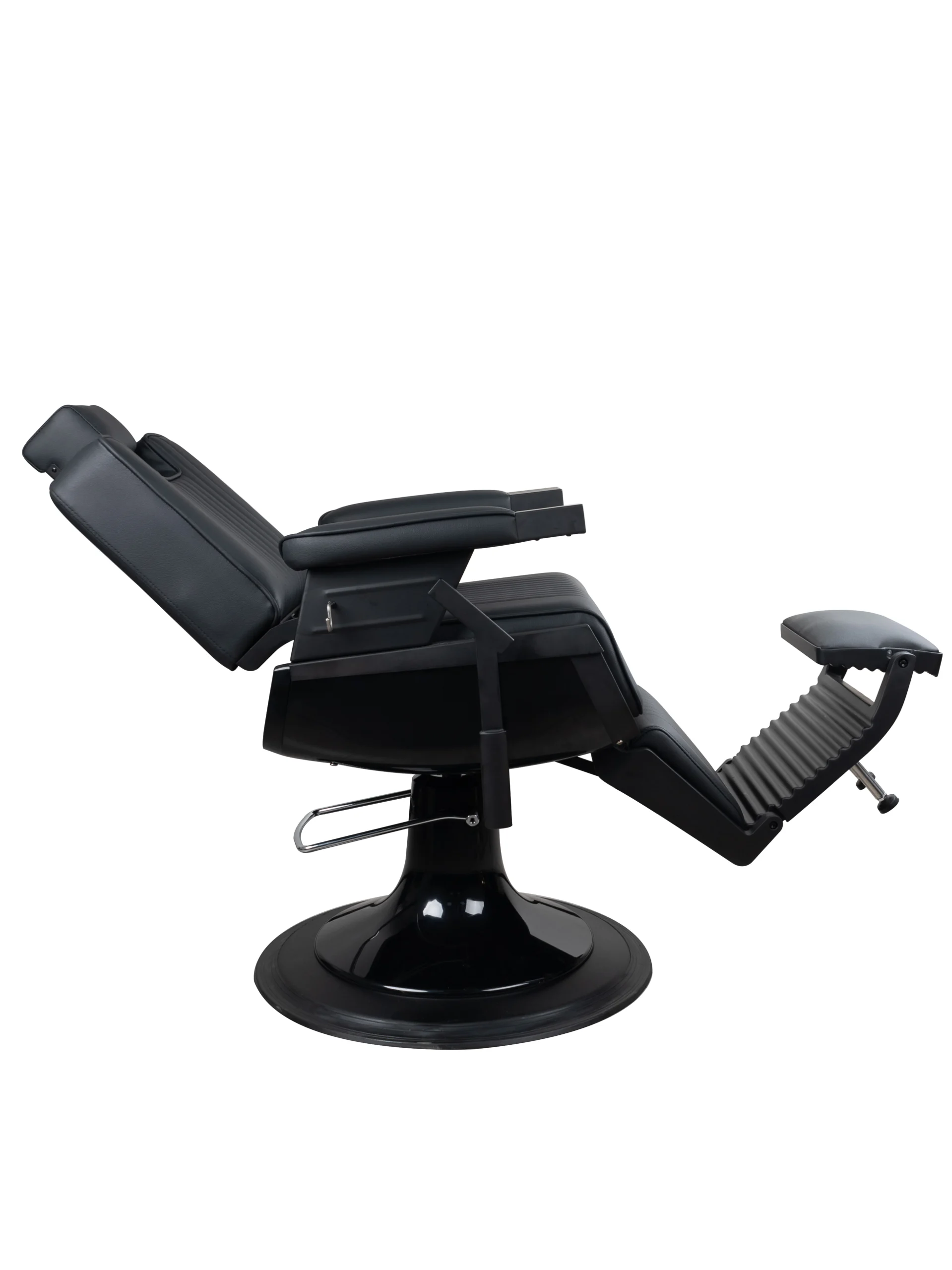
For shops offering shaves, a reclining ability of at least 135 to 150 degrees is non-negotiable. Ensure the reclining mechanism is gas-piston assisted or heavy-duty manual; flimsy levers lead to workplace injuries and poor customer experiences. The headrest must be adjustable and, ideally, removable to provide the barber with unobstructed access to the neck area.
Material Durability: Beyond Aesthetics
While genuine leather is prestigious, modern PVC vinyl is often preferred in high-traffic environments due to its chemical resistance to hair dyes, barbicide, and oils. Look for “medical-grade” or “marine-grade” upholstery. Underneath the surface, high-density foam (at least 2.5 lbs/ft³) is required to prevent “bottoming out” where the client feels the plywood base after six months of use.
The Purchasing Process: A Step-by-Step Action Plan
How do you actually execute the purchase? Follow this professional procurement workflow:
Draft a Floor Plan
Measure your “work station radius.” A standard chair requires a 6-foot diameter circle to rotate freely and recline without hitting walls or other stations.
Set a Total Cost of Ownership (TCO) Budget
Include shipping, assembly time, and potential maintenance. Buying in bulk (e.g., 5+ units) often triggers wholesale discounts and significantly lowers the per-unit shipping cost of heavy freight.
Vetting Suppliers
Look for cGMP compliance in manufacturing facilities if you are sourcing internationally. Reputable suppliers like Keller International or specialized industrial trading partners provide transparent technical datasheets.
Warranty Verification
Ensure there is a tiered warranty—usually 1 year on upholstery and 3-5 years on the hydraulic pump.
Expert Insight: “The bitterness of poor quality remains long after the sweetness of low price is forgotten.” In the barbering industry, a broken chair doesn’t just cost a repair fee; it costs the daily revenue of an entire station.
Regulatory Compliance and Safety Standards
In many jurisdictions, salon equipment must meet specific safety standards. While the FDA primarily regulates medical devices, they provide frameworks for “General Wellness Devices” that influence the manufacturing of ergonomic seating. In Europe, look for CE marking; in the US, UL-listed electrical components (for motorized chairs) are vital for insurance compliance.
For more information on workplace safety and ergonomic standards, refer to the OSHA Ergonomics Guidelines and the ISO standards for furniture safety.
The Aesthetics of Utility: Design and Style Strategies
While technical specifications ensure the chair functions, the style of your barber chair defines your brand’s visual narrative. In the modern grooming industry, there is a clear divide between “Heritage Vintage” and “Hyper-Modern” aesthetics. When purchasing, you must ensure your chosen style is scalable—if you expand to a second location, can you source the same model three years from now?
Vintage-Inspired vs Modern Minimalist
Vintage chairs often feature heavy cast aluminum frames, intricate carvings, and classic “tucked-and-rolled” upholstery. These are ideal for traditional shops focusing on heritage services. Conversely, modern chairs utilize sleek, geometric lines and often incorporate motorized adjustments for a frictionless tech-forward experience.
Color Palettes
Black remains the industry standard for its ability to hide hair dye stains and wear. However, “oxblood,” “cognac,” and “slate grey” are trending in high-end boutique shops.
Frame Finishes
Chrome is the most durable against cleaning chemicals. Matte black and gold finishes are popular but require specialized non-abrasive cleaners to prevent chipping.
Brand Consistency
If your shop features a rustic brick interior, a high-gloss plastic modern chair will feel “out of place.” Aim for material harmony (e.g., matching the chair’s metal accents with your station mirrors).
Evaluating Supply Chain: Where and How to Buy
Navigating the global supply chain for salon furniture requires a professional procurement mindset. You have three primary avenues for purchasing:
A. Local Showrooms & Physical Stores
Purchasing from physical retail stores or local showrooms (such as specialized salon equipment outlets) offers the most “hands-on” experience. The primary advantage is the ability to test the hydraulic pump and leather quality in person before buying. While the “landed cost” is often higher, these sellers handle import duties and provide local warranty support, making this a low-risk path for boutique salon owners.
B. Direct-to-Factory (Global Manufacturing)
For salon owners and distributors looking for long-term supply chain stability and better margins, sourcing directly from industrial hubs is the most efficient route. This allows for professional customization and ensures your project scheme is fully realized. We highly recommend leveraging verified digital platforms to connect with leading manufacturers:Recommended: Alibaba — Your One-Stop Procurement Hub. When going this route, you can secure factory-direct pricing while ensuring on-time project completion and robust distribution support for large-scale salon setups.
C. The Secondary Market (Used Equipment)
While tempting for budget-conscious startups, used chairs often hide mechanical fatigue. If buying used, always check for “pump drift” (where the chair slowly sinks under weight) and “backrest play” (looseness in the reclining hinge). These issues are often non-repairable without expensive replacement parts, which may delay your project’s grand opening.
Spatial Planning & Branding
A common mistake in barbershop planning is under-budgeting for furniture to save capital for marketing. However, the best budget barber chair is the one you only have to buy once. A $600 chair that breaks in 12 months costs more per day than a $1,800 chair that lasts 10 years.
Expense Category
“Budget” Chair (Entry-Level)
“Premium” Chair (Mid-High End)
Initial Purchase
$450
$1,500
Estimated Lifespan
2 Years
10+ Years
Total Cost over 10 Years
$2,250 (5 Replacements)
$1,500 (1 Purchase)
Potential Loss
High (Unreliable)
Low (Reliable)
To maximize your budget, prioritize heavy-duty steel frames over plastic-shrouded alternatives. The frame is the “skeleton” of your business; if it fails, the chair is a total loss.
Logistics and Shipping: The “Hidden” Expense
A professional barber chair can weigh between 150 lbs and 250 lbs. Because of this, “Free Shipping” is rarely truly free—it is usually baked into a higher retail price. When ordering, ensure the carrier provides “Liftgate Service.” Without it, the trucking company will expect you to offload these 200-lb crates from the back of a high trailer yourself.
For international orders, clarify the Incoterms. DDP (Delivered Duty Paid) is preferred for small business owners, as the seller handles all customs clearance and local delivery logistics.
The Inspection and Testing Protocol: Post-Purchase QA
Once your shipment arrives, the “purchase” isn’t complete until you’ve conducted a rigorous Quality Assurance (QA) check. Professional barbershop owners treat this like a vehicle inspection. A barber chair with a factory defect can lead to liability issues if it fails while a client is reclined.
The Load Test
Do not just sit in the chair. Pump the hydraulic pump to its maximum height with a staff member (ideally 200+ lbs) seated. Let it sit for 10 minutes. If the chair “creeps” or loses height, the hydraulic seal is compromised. This is a common issue with budget barber chair models and should be addressed immediately under warranty.
Range of Motion (ROM) Verification
Test the reclining ability. The transition from upright to reclined should be fluid, not jerky. Listen for “metal-on-metal” grinding sounds, which indicate poor lubrication or misaligned heavy-duty steel frames. Check the footrest stability; it should support the weight of a client’s legs without bowing or clicking.
Upholstery Seam Integrity
Inspect the stitching on the seat cushion and armrests. In high-moisture environments (shops offering hair washing and hot shaves), loose threads allow water to seep into the high-density foam, leading to mold and internal rot. Ensure all PVC vinyl or leather surfaces are taut and free of “air bubbles.”
Maintenance: Protecting Your Investment
Purchasing is the first step; preservation is the second. To ensure your best quality barber chairs reach their 10-year lifespan, implement a weekly maintenance schedule:
Hydraulic Care
Wipe the pump rod with a clean, dry cloth weekly to remove hair and debris that can tear the internal rubber seals.
Bolt Tightening
Vibrations from reclining and rotating naturally loosen bolts over time. Perform a “quarter-turn” check on all base and armrest bolts every 90 days.
Chemical Safety
Never use bleach or alcohol-based cleaners on PVC vinyl. These strip the plasticizers, leading to cracking. Use specialized pH-neutral “salon chair cleaners” to maintain the material’s elasticity.
Final Checklist: Before You Hit “Order”
Before finalizing your procurement, run through this definitive checklist to ensure no “hidden” factors disrupt your opening day:
Space Clearance: Do I have 32 to 36 inches of clearance between chairs?
Base Weight: Is the base heavy enough (usually cast iron or thick steel) to prevent tipping when the chair is fully reclined?
Lead Times: If ordering custom colors, is the 8-12 week lead time factored into my grand opening date?
Repairability: Does the supplier sell individual hydraulic pumps or headrests as spare parts? (Avoid “single-unit” manufacturers where one broken part totals the entire chair).
Conclusion: The Foundation of Your Craft
Purchasing barber chairs is more than a design choice; it is a fundamental business decision that impacts your daily workflow, staff ergonomics, and client satisfaction. By prioritizing a high-capacity hydraulic pump, durable high-density foam, and a style that matches your brand’s “service soul,” you transform a simple seat into a high-performing business asset.
Investing in quality today prevents the “silent killers” of a new barbershop: equipment downtime and negative reviews. Whether you choose a luxury barber chair with motorized adjustments or a rugged, vintage-inspired classic, ensure it meets the technical rigors of a professional environment.
For those ready to elevate their shop’s standards, sourcing through reputable industrial partners ensures that every dollar spent contributes directly to the longevity and prestige of your brand.
Frequently Asked Questions (FAQ)
Q: Can I use a salon styling chair instead of a barber chair?
A: While possible for basic haircuts, styling chairs usually lack the reclining ability and heavy-duty footrest required for traditional barbering services like shaves and beard trims. For a true barbershop experience, a dedicated barber chair is essential.
Q: How long should a high-quality barber chair last?
A: A professional-grade chair with a heavy-duty steel frame and quality hydraulics should last 8 to 12 years with proper maintenance. Budget models typically need replacement within 2 to 3 years in high-traffic shops.
Q: Is genuine leather better than PVC for barber chairs?
A: Genuine leather offers unmatched prestige and breathability but requires high maintenance. High-grade PVC vinyl is generally superior for modern shops due to its durability against chemical spills and ease of sanitation between clients.