
In the competitive beauty and wellness industry, the goal of any modern salon is to strike a delicate balance: maximizing operational efficiency while delivering an unforgettable client experience. One of the most critical touchpoints where this balance is either achieved or lost is the backbar washing station. Today, salon owners face a pivotal equipment decision: should you invest in a fully immersive, luxurious setup, or is a traditional, reliable backwash unit better suited for your business model?
Choosing between a highly specialized SPA chair and a standard shampoo chair is no longer just a matter of interior design; it is a strategic business decision that defines your service menu, dictates your client turnover rate, and ultimately impacts your bottom line. As scalp health and wellness-focused treatments continue to dominate industry trends, understanding the technical and experiential differences between these two pieces of equipment is essential for future-proofing your salon.
Understanding the Core Differences
To make an informed decision, we must first break down the fundamental engineering, purpose, and utility of both options. While both serve the primary function of hair cleansing, their design philosophies cater to entirely different client journeys.
What is a Head Spa Chair? The Ultimate Luxury Destination
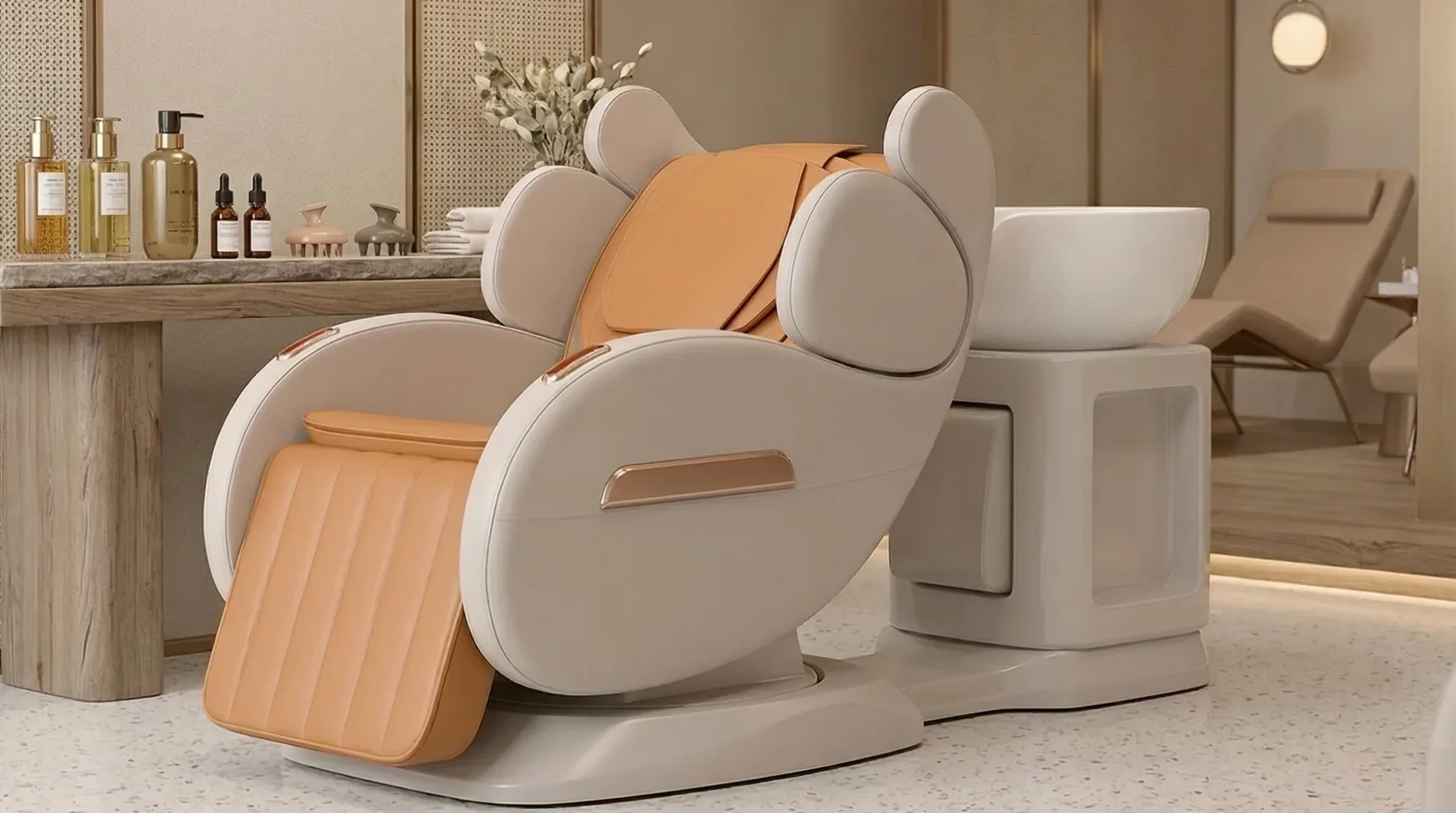
Often considered the Rolls-Royce of salon equipment, a head SPA chair is meticulously engineered for extended, therapeutic treatments rather than a simple rinse-and-go service. Originating from deeply rooted Japanese scalp care rituals, these highly specialized units are built to deliver supreme, sustained comfort.
When implementing a head spa system, you are shifting the focus from hair aesthetics to holistic scalp health and deep relaxation. Key technical features of a premium SPA chair typically include:
- Full-Flat Reclining Capabilities: Unlike traditional seating, these units allow the client to lie completely horizontal. This ergonomic positioning is crucial for promoting optimal blood circulation and preventing neck fatigue during services that last over 60 minutes.
- Integrated Hydrotherapy Systems: Many advanced models feature water-circulation halos (creating a continuous “waterfall” effect across the hairline) and precise temperature controls.
- Built-in Steam Therapy: Essential for opening hair follicles, enhancing the penetration of deep conditioning masks, and softening scalp buildup prior to exfoliation.
- Integrated Massage Functions: High-end units often incorporate mechanical shiatsu massage nodes within the bed itself, elevating a standard hair service into a full-body wellness experience.
Investing in this equipment sends a clear psychological signal to your clientele: you are offering a sanctuary for premium self-care and targeted trichological treatments.
What is a Shampoo Chair? The Efficiency Engine
On the opposite end of the spectrum is the trusty shampoo chair—the undisputed workhorse of the global salon industry. Engineered specifically for functionality, spatial efficiency, and rapid turnover, its primary objective is to prepare the client’s hair for cutting, coloring, or styling without unnecessary delay.
A high-quality shampoo chair is usually upright or semi-reclining. The ergonomic focus here is on aligning the client’s neck securely with the ceramic or resin basin for a quick, efficient wash. While modern iterations have vastly improved client comfort through high-density memory foam, enhanced lumbar support, and silicone gel neck rests, they are intentionally not designed for extended napping or hour-long therapeutic sessions.
These streamlined backwash stations are structurally perfect for:
- Standard prep-washes, deep cleansing, and routine conditioning.
- Rapid application and rinsing of toners, glosses, and color lighteners directly at the bowl.
- Express conditioning or bond-building treatments requiring 10 to 15 minutes of processing time.
Detailed Comparison: SPA Chair vs. Shampoo Chair
To determine which unit aligns with your salon’s strategic vision, we must compare them across several critical business metrics. Industry best practices dictate that salon equipment should be evaluated based on client experience, service capability, spatial requirements, and return on investment (ROI).
Client Experience and Ergonomic Comfort
The client experience is entirely dictated by the physical posture the equipment enforces. A standard backwash unit requires the client to rely heavily on their neck for support, even with premium gel rests. For a 10-minute color rinse, this is perfectly acceptable and industry standard. However, if a client is subjected to this posture for a 45-minute deep-conditioning service, they risk experiencing “beauty parlor stroke syndrome” or general cervical discomfort.
Conversely, the lie-flat design of a head spa unit distributes the client’s body weight evenly across the mattress. The neck basin is typically deeper and features a specialized headrest (often a padded ring or dual-cushion system) that supports the base of the skull rather than the delicate cervical spine. This allows the client to achieve a state of parasympathetic nervous system dominance—true relaxation.
Service Offerings and Treatment Duration
Your service menu is directly constrained by your equipment. A traditional setup limits you to express services. If your business model revolves around high-volume color corrections, rapid foil highlights, or back-to-back men’s cuts, a compact, semi-reclining unit maximizes your daily appointment slots.
Alternatively, introducing a holistic scalp care unit unlocks highly profitable, extended service categories. You can offer high-ticket services such as:
- 60-minute detoxifying scalp facials.
- Aromatherapy-infused hot oil treatments.
- Scalp micro-exfoliation for managing dandruff or psoriasis.
- Anti-hair loss protocol treatments requiring prolonged steam and LED light therapy.
Space, Plumbing, and Installation Requirements
From a commercial build-out perspective, the technical specifications between these two units vary drastically. A standard wash station has a relatively small footprint, allowing salon owners to install multiple units side-by-side (typically requiring only 24 to 30 inches of width per chair). Standard plumbing lines (hot/cold supply and a basic PVC drain) are sufficient.
A luxury head spa setup is significantly more demanding. Because the client lies completely flat, the unit requires an extended footprint—sometimes up to 75 inches in length when fully reclined. Furthermore, the advanced hydrotherapy features, steam generators, and continuous water circulation systems may require upgraded water pressure (often requiring a minimum of 30-40 PSI), specialized water softeners to prevent mineral buildup in delicate mechanisms, and dedicated electrical circuits for heating elements and massage motors.
Feature/Metric
Head SPA Chair
Standard Shampoo Chair
Primary Use Case
Extended therapeutic treatments, scalp wellness
Quick washing, color rinsing, express treatments
Recline Angle
180-degree full flat
45 to 130-degree semi-recline
Average Treatment Time
45 – 90 minutes
5 – 15 minutes
Footprint & Space Needs
High (Requires extended length and privacy)
Low to Moderate (Easily grouped in rows)
Installation Complexity
High (May require upgraded water pressure & electrical)
Standard (Basic salon plumbing)
Analyzing the Return on Investment (ROI) and Pricing Strategy
When upgrading your salon’s infrastructure, the initial capital expenditure must be justified by a clear path to profitability. The financial dynamics between a luxury SPA chair and a traditional backwash unit are fundamentally different, requiring distinct business strategies.
The Economics of Efficiency: High-Volume Revenue
A standard shampoo chair is a low-barrier investment designed for volume. Because these units are relatively affordable and take up minimal space, salons can install multiple stations to accommodate a high flow of clients. The ROI here is driven by turnover. If a stylist can process three color clients simultaneously by utilizing multiple standard bowls for quick rinses and toners, the revenue generated per square foot of your backbar is exceptionally high.
The Economics of Experience: Premium Ticket Services
Conversely, the financial model for a fully equipped head SPA chair is based on high-ticket, low-volume services. While the upfront cost of the equipment—and the potential need for plumbing upgrades—is significantly higher, the revenue per service hour drastically increases.
Industry data indicates that specialized scalp facials and holistic hair therapies command premium pricing, often ranging from $150 to over $300 per session, depending on your geographic market. Because these treatments are marketed as wellness experiences akin to visiting a high-end day spa, clients are willing to pay a premium. The ROI is achieved through higher profit margins per client, increased client retention due to the unique experience, and the retail upselling of specialized trichology products used during the treatment.
Aligning Equipment with Your Salon’s Business Model
Choosing the right equipment requires an honest audit of your salon’s brand identity, target demographic, and operational flow. Here are actionable insights based on different business models:
Scenario 1: The High-Volume Color Studio or Barbershop
If your salon specializes in rapid transformations, express root touch-ups, or high-turnover men’s grooming, the traditional washing station is your optimal choice. Your clients value efficiency and excellent results without unnecessary delays. Investing in a highly complex bed with massage features would create a bottleneck in your operations, as clients would occupy the bowl longer than necessary for your core services.
Scenario 2: The Holistic Wellness and Trichology Center
If your brand ethos revolves around organic haircare, scalp health, and stress relief, investing in a specialized SPA chair is non-negotiable. The modern consumer is increasingly educated about the “skinification of hair”—the understanding that healthy hair growth starts at the scalp level. To perform intricate exfoliation, deep follicular cleansing, and multi-step hydration protocols, you need a unit that supports the client comfortably for up to 90 minutes.
Scenario 3: The Hybrid VIP Approach
Many successful mid-to-large-scale salons adopt a hybrid model. They maintain a primary backbar area equipped with 3-4 standard units for rapid color rinsing and daily wash-and-blowout clients. Simultaneously, they build out a dedicated, soundproofed “VIP Treatment Room” featuring a single luxury scalp therapy bed. This allows the business to maintain its high-volume revenue stream while capturing the growing market for premium wellness services, effectively maximizing both volume and high-margin service offerings.
Installation, Ergonomics, and Compliance Standards
Before finalizing your equipment purchase, it is vital to consider the technical infrastructure of your commercial space and the physical health of your staff.
Protecting Your Most Valuable Asset: The Stylist
Salon work is notoriously demanding on the musculoskeletal system. A poorly designed washing station can lead to chronic lower back pain, carpal tunnel syndrome, and shoulder strain for the operator.
When evaluating a standard shampoo chair, ensure that the basin height is adjustable or perfectly aligned with your stylists’ average height to prevent excessive bending. For a premium SPA chair, the ergonomic dynamic shifts. Because the client is lying flat, the stylist is often seated on an ergonomic stool at the head of the bed, much like an esthetician. This seated position dramatically reduces the physical toll on the stylist’s back and legs, allowing them to perform longer services without fatigue. Adhering to OSHA ergonomic guidelines is not just about compliance; it is about extending the career longevity of your team.
Water Filtration and cGMP Compliance
If you are pivoting toward scalp therapies, the quality of your water becomes just as important as the products you use. Advanced hydrotherapy beds continuously circulate water over the client’s skin. Hard water containing heavy metals or ferrous contaminants can exacerbate scalp conditions, negating the benefits of the treatment.
Best practices dictate installing a commercial-grade water filtration and softening system at the primary intake valve of your salon. Furthermore, when introducing specialized clinical serums and exfoliants into your new wellness menu, ensure that all retail and backbar products adhere strictly to FDA cosmetic regulations and labeling requirements. Providing a premium service means guaranteeing the safety, purity, and efficacy of every element touching the client’s skin.
Conclusion: Making the Strategic Choice
The decision between a traditional backwash unit and a high-end wellness bed is not simply a matter of aesthetics; it is a declaration of your salon’s future direction. The standard shampoo chair remains the unbeatable champion of efficiency, practicality, and high-volume operations. It is the reliable backbone of traditional cosmetology.
However, the modern beauty industry is rapidly evolving. Consumers are seeking experiences that bridge the gap between aesthetic beauty and holistic wellness. The premium head SPA chair caters directly to this demand, transforming a mundane maintenance task into an extraordinary, revenue-generating wellness ritual.
Evaluate your space, survey your current clientele, and project your financial goals. Whether you choose to optimize for speed or elevate for luxury, ensuring that your equipment flawlessly supports your stylist’s craft and your client’s comfort is the ultimate key to salon success.
Frequently Asked Questions (FAQ)
Q: Can I perform a head spa treatment in a regular shampoo chair?
A: While you can offer abbreviated scalp massages or 10-minute deep conditioning masks in a standard unit, you cannot safely or comfortably perform a full 60-to-90-minute scalp facial. Traditional semi-reclining units put too much prolonged pressure on the client’s cervical spine, making extended treatments highly uncomfortable and potentially unsafe.
Q: What is the average payback period for a luxury washing unit?
A: The ROI timeline depends entirely on your marketing and pricing strategy. If a luxury unit costs $4,000, and you charge $150 per premium scalp treatment, you would need to perform approximately 27 services to recoup the initial equipment cost (excluding product overhead and labor). In a moderately busy salon promoting this new service, the payback period is typically achieved within 2 to 4 months.
Q: Do advanced therapeutic beds require special plumbing?
A: Yes, many high-end units require more than a standard hot/cold line and PVC drain. Because they often feature built-in steam generators, waterfall halos, and thermostatic mixing valves, you may require upgraded water pressure (often 30+ PSI), dedicated electrical circuits for the heating elements, and sometimes floor-mounted plumbing rather than wall-mounted setups. Always consult a licensed plumber and electrician before purchasing.