
In the highly competitive beauty and wellness sector, the physical environment of your establishment is arguably just as critical as the professional services rendered. As the industry navigates through 2026, client expectations have matured significantly. Today’s patrons demand immersive, holistic wellness experiences rather than transactional appointments. For salon owners, and commercial interior designers, staying ahead of emerging 2026 salon equipment trends is not merely an aesthetic pursuit—it is a strategic business imperative designed to drive client retention, justify premium pricing, and maximize revenue per square foot.
The foundation of this spatial transformation lies in the strategic procurement and placement of commercial-grade salon furniture. Upgrading your fixtures is a capital investment that directly impacts both operational efficiency and the perceived value of your brand. In this comprehensive guide, we will analyze the dominant architectural and decor shifts defining the industry this year, providing actionable insights for your next facility renovation.
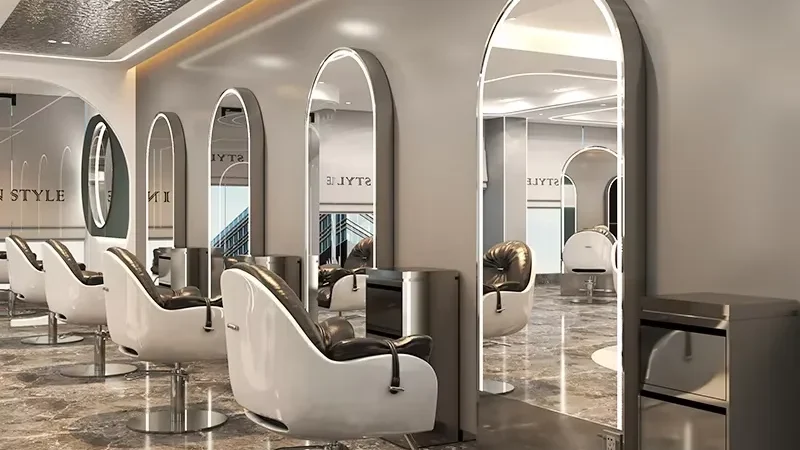
The Paradigm Shift in Commercial Salon Layouts
The traditional, densely packed rows of styling stations that characterized the early 2010s have become obsolete. In their place, a more nuanced approach to spatial planning has emerged, prioritizing acoustics, privacy, and fluid traffic patterns for both staff and clientele.
Transitioning to Hybrid Floor Plans
Industry best practices indicate a strong pivot towards “hybrid floor plans.” This layout methodology balances the high-energy, collaborative atmosphere of an open-concept color bar with secluded, acoustically dampened zones designed for processing, shampooing, and spa treatments. By utilizing modular partitions and strategically placed styling units, salon managers can dynamically alter the footprint of the space based on daily operational demands.
Trend 1: Sustainable and Eco-Conscious Facility Design
Sustainability has evolved from a niche marketing buzzword into a baseline expectation for modern consumers. A recent global retail report highlighted that a significant demographic of premium consumers actively choose wellness establishments that demonstrate verified environmental stewardship.
Material Sourcing and Low-VOC Certifications
When selecting new equipment, forward-thinking procurement teams are prioritizing manufacturers that utilize recycled or rapidly renewable materials, such as reclaimed timber, bamboo, and high-density post-consumer plastics. Furthermore, ensuring that the upholstery and finishes on your styling chairs emit low Volatile Organic Compounds (VOCs) is critical for maintaining superior indoor air quality.
Implementing eco-conscious fixtures not only minimizes your carbon footprint but also actively promotes a healthier respiratory environment for stylists who are subjected to chemical fumes during long operational shifts.
Trend 2: The Integration of Biophilic Design Elements
Biophilic design—the architectural concept of connecting occupants more closely to nature—is dominating salon furniture and interior specifications in 2026. This trend counters the sterile, ultra-minimalist aesthetics of the past decade by introducing organic warmth into commercial settings.
Organic Shapes and Earth Tones
We are observing a massive departure from harsh, right-angled reception desks and rigid seating. The current market heavily favors curved, ergonomic shapes that mimic natural forms. Archways, rounded mirrors, and styling chairs with soft, sweeping silhouettes help soften the visual impact of the space, inducing an immediate psychological sense of calm.
- Color Palettes: Stark whites and cold greys are being replaced by rich, grounding earth tones. Expect to see widespread adoption of terracotta, sage green, warm ochre, and deep muted blues in upholstery and wall coverings.
- Natural Textures: Incorporating tactile materials such as raw stone, unpolished wood grain, and genuine top-grain leather creates a multi-sensory environment that elevates the perceived luxury of the salon.
- Living Installations: Beyond potted plants, modern salons are integrating vertical living green walls directly behind backwash units or reception areas, serving as both natural air purifiers and striking focal points.
Trend 3: Ergonomic Optimization and Stylist Longevity
In 2026, the definition of premium salon furniture extends far beyond visual appeal; it is fundamentally tied to human factors engineering. Salon owners are increasingly recognizing that operator fatigue is a primary driver of reduced productivity and high staff turnover. Consequently, ergonomic optimization is no longer viewed as a luxury, but rather a vital component of a facility’s risk management and operational efficiency strategy.
Modern commercial-grade styling stations and seating are engineered to support the musculoskeletal health of the stylist. Features such as heavy-duty hydraulic pumps with extended travel ranges, anti-fatigue matting engineered into the base, and ultra-low profile chair bases allow technicians to maintain a neutral spine alignment during prolonged precision cutting or coloring sessions. Industry best practices suggest that investing in scientifically backed ergonomic equipment yields a measurable return on investment (ROI) through decreased worker compensation claims and increased daily service capacity.
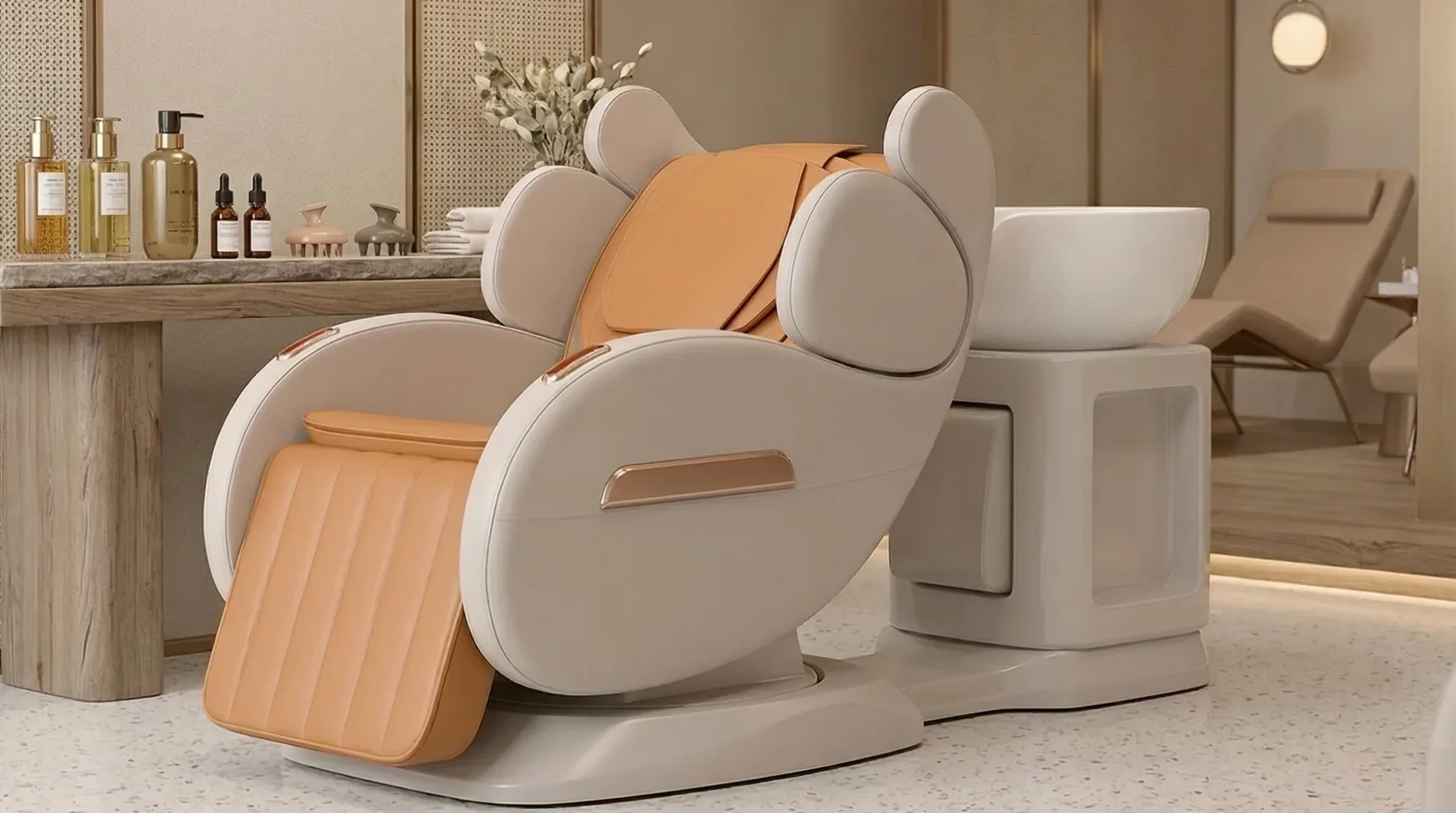
Strategic Procurement Analysis: Styling Chairs vs. Backwash Units
When facility directors and B2B buyers allocate capital expenditure for a renovation, a common dilemma arises: where should the bulk of the budget be concentrated? To maximize the perceived value for the client while protecting the health of the staff, a comparative analysis of primary equipment is essential.
Equipment Category
Average Client Dwell Time
Ergonomic Impact on Stylist
Direct Revenue Generation Impact
2026 Investment Priority
Hydraulic Styling Chairs
60 – 180 Minutes
High (Requires constant height adjustment and rotation)
Very High (Primary location for cutting, coloring, and styling)
Tier 1: Prioritize structural integrity, pump warranty, and heavy-duty weight capacity.
Shampoo Backwash Units
15 – 30 Minutes
Critical (Poor design leads to severe lower back strain for the operator)
High (Crucial for upselling scalp treatments, deep conditioning, and spa services)
Tier 1: Prioritize adjustable ceramic bowls, lumbar support, and electric leg rests for luxury appeal.
As the table illustrates, both components are critical, but they serve different commercial purposes. While the styling chair is the workhorse of the floor, the backwash unit is increasingly becoming the primary profit center for high-margin add-on services like deep-tissue scalp massages and specialized chemical treatments. Therefore, 2026 procurement trends show a massive surge in demand for fully motorized, shiatsu-massage-integrated backwash systems that transform a standard hair wash into a premium spa experience.
Trend 4: Smart Furniture and Tech-Integrated Workspaces
The integration of technology into the physical environment is an undeniable 2026 salon trend. Today’s commercial client is hyper-connected, and the facility must support this lifestyle seamlessly. However, the integration must be subtle and sophisticated, avoiding a cluttered or overly industrial appearance.
Seamless Connectivity and Processing Zones
We are witnessing the rapid obsolescence of standard waiting room chairs. Instead, commercial interior designers are specifying “processing bars” or communal tables equipped with flush-mounted, induction charging pads and discreet USB-C ports. This allows clients working remotely to remain productive during lengthy color processing times, significantly enhancing their overall satisfaction and likelihood of rebooking.
Furthermore, standard salon furniture is being upgraded with smart diagnostic capabilities. High-end mirror stations now frequently incorporate hidden LED touchscreens that can display a client’s past color formulas, inspire look-books, or even utilize augmented reality (AR) to simulate hair color changes before the physical service begins. This level of technological sophistication positions the salon as a cutting-edge authority in a crowded market.
Trend 5: Multi-Functional and Modular Equipment
Commercial real estate costs in urban centers are at a premium. To maximize profitability, salon owners must generate maximum revenue from every square foot. This economic pressure is driving the trend toward modular, multi-functional furniture systems.
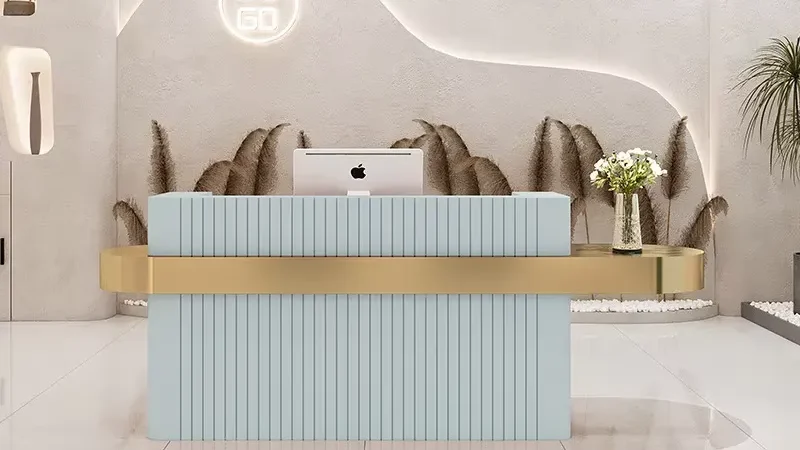
Static, heavy wooden reception desks are being replaced by mobile, agile podiums. Large, cumbersome retail display shelving is giving way to modular, magnetic floating shelves that can be reconfigured weekly to highlight specific high-margin retail products. By utilizing mobile color carts, collapsible styling stations, and modular seating, a single space can transition from a bustling hair salon during the day to an educational seminar space or a VIP bridal suite in the evening.
Trend 6: High-CRI Lighting and True-to-Tone Illumination
A frequently overlooked aspect of interior renovation is the integration of lighting within salon furniture. In 2026, ambient overhead lighting is no longer sufficient for precision chemical services. The trend has shifted heavily toward styling mirrors and stations equipped with integrated, high-Color Rendering Index (CRI) LED systems.
The Science of Color Accuracy
For a colorist, lighting that distorts hue is a catastrophic liability. Commercial styling mirrors are now required to feature lighting with a CRI of 90 or above, ensuring true-to-tone color reflection. This eliminates the dreaded scenario where a client’s blonde balayage looks perfect in the chair but overly brassy in natural sunlight.
Furthermore, leading procurement specialists are opting for stations with adjustable color temperature settings (ranging from warm 2700K to daylight 5000K). This allows the stylist to simulate different lighting environments for the client, providing a bespoke, premium consultation experience that solidifies the salon’s reputation for meticulous attention to detail.
Conclusion: Strategic Capital Investment for 2026
Navigating the 2026 salon trends is not about blindly following aesthetic fads; it is a calculated business strategy aimed at future-proofing your commercial establishment. The shift toward sustainable materials, biophilic layouts, integrated smart technology, and strict ergonomic compliance represents a maturation of the wellness industry.
When updating your facility, view the procurement of commercial salon furniture not as a depreciating expense, but as a direct investment in staff retention, operational efficiency, and enhanced client lifetime value. By strategically selecting high-performance, modular, and ergonomic equipment, you establish a resilient, luxurious environment capable of commanding premium service rates in an increasingly competitive market.
Frequently Asked Questions (FAQ)
Q: How often should a commercial salon replace its furniture?
A: Industry standards suggest that high-traffic commercial salon equipment, particularly styling chairs and backwash units, should be evaluated for structural integrity and aesthetic relevance every 5 to 7 years. However, high-quality, heavy-duty hydraulic pumps can often last over a decade with proper preventative maintenance. Upgrading sooner is typically driven by rebranding efforts or the need to integrate new ergonomic technologies.
Q: What is the ROI of upgrading to ergonomic salon equipment?
The Return on Investment (ROI) for ergonomic equipment is calculated through several metrics: reduced employee absenteeism due to musculoskeletal strain, lower workers’ compensation risk, and increased daily service volume. Stylists experiencing less physical fatigue can comfortably handle an additional client per day, which rapidly offsets the initial capital expenditure of premium seating.
Q: Are eco-friendly salon stations more expensive to maintain?
A: No, they are generally not more expensive to maintain. Modern sustainable materials, such as high-density recycled composites and low-VOC vegan leathers, are specifically engineered for commercial environments. They are highly resistant to chemical spills (like bleach and color developers) and can be easily sanitized with standard hospital-grade disinfectants, often boasting a longer lifecycle than traditional porous materials.