
When outfitting a commercial spa, medical aesthetics clinic, or high-end salon, the procurement of commercial furniture represents a significant capital expenditure. Among all the equipment required, beauty beds are arguably the most critical asset. They serve as the primary physical interface between your service providers and your clientele, directly impacting both operational efficiency and customer satisfaction.
A common pitfall for facility managers and procurement officers is prioritizing aesthetic design over structural integrity. The hidden materials beneath the surface—the grade of the upholstery, the density of the foam, and the metallurgy of the frame—dictate the lifespan of the equipment. Choosing subpar materials leads to premature upholstery peeling, foam sagging, and structural instability, resulting in costly replacements and potential liability. In this comprehensive engineering and procurement guide, we will dissect the material science behind premium beauty beds, providing you with actionable insights to maximize your return on investment (ROI).
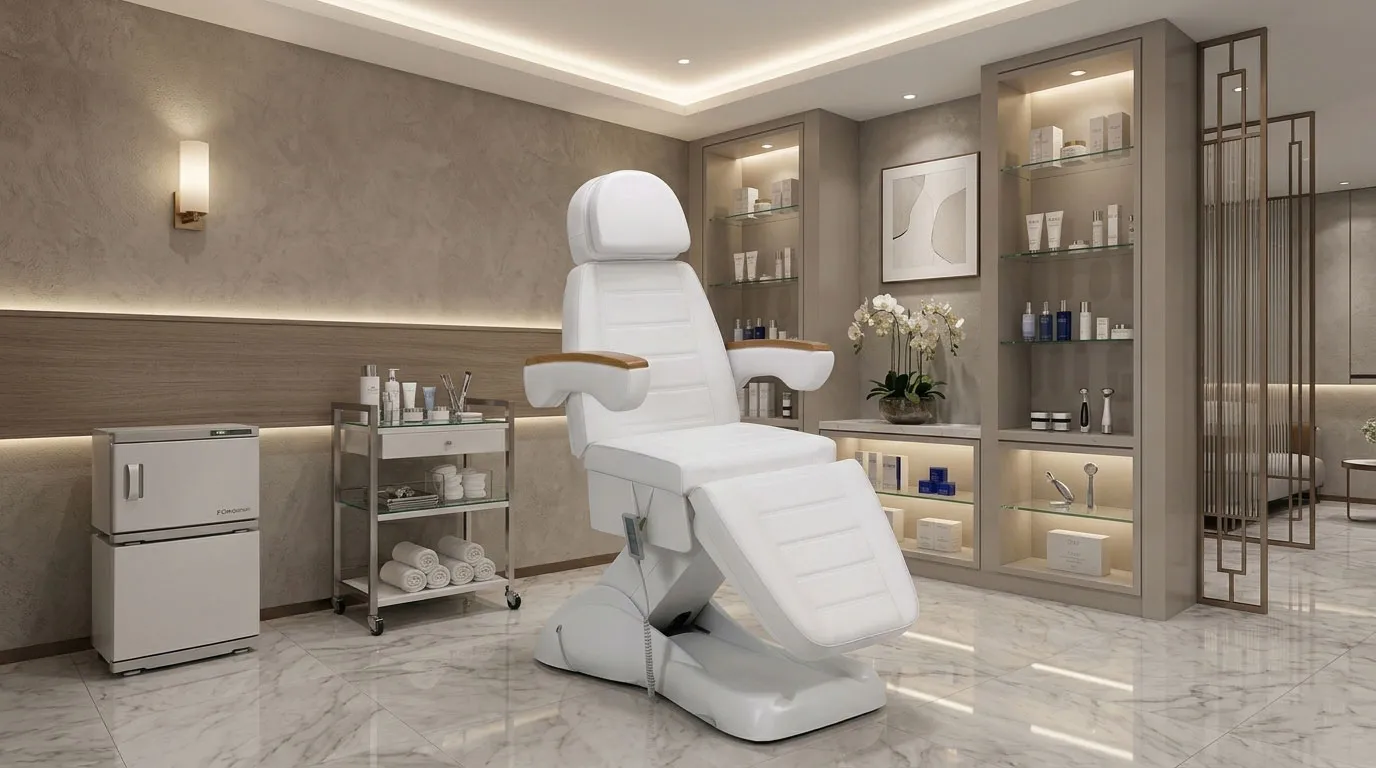
Upholstery Materials: The First Line of Defense
The exterior upholstery is subjected to the harshest conditions in a commercial environment. It must endure constant mechanical friction, exposure to harsh chemical solvents, massage oils, and rigorous daily disinfection protocols. Selecting the correct synthetic leather is paramount for maintaining a sanitary and luxurious environment.
Polyurethane (PU) Leather vs. Polyvinyl Chloride (PVC) Leather
The vast majority of commercial spa equipment utilizes either PU or PVC synthetic leather. Understanding the chemical and physical differences between these two polymers is essential for making an informed purchasing decision.
- Polyurethane (PU) Leather: PU is the gold standard for high-end spa environments. It is highly breathable, exceptionally soft, and closely mimics the tactile feel of genuine leather. More importantly, premium PU leather exhibits excellent hydrolysis resistance, meaning it will not easily crack or peel when exposed to moisture and sweat over time.
- Polyvinyl Chloride (PVC) Leather: PVC is a denser, non-porous plastic polymer. While it is generally more affordable and highly resistant to stains and spills, it lacks the breathability and multi-directional stretch of PU. PVC tends to retain heat, which can cause client discomfort during prolonged treatments. Furthermore, prolonged exposure to oil-based massage lotions can extract the plasticizers from PVC, causing it to become brittle and crack.
Medical-Grade Antimicrobial Vinyl for Clinical Settings
For medical spas (medspas) performing invasive aesthetic procedures, standard PU or PVC is insufficient. Procurement guidelines dictate the use of medical-grade, antimicrobial vinyl. This specialized upholstery is engineered to withstand hospital-grade disinfectants without degrading. According to the environmental infection control guidelines published by the Centers for Disease Control and Prevention (CDC), utilizing non-porous, easily cleanable surfaces is a mandatory practice for preventing cross-contamination in clinical settings.
Actionable Procurement Advice: When requesting quotes from manufacturers, demand specifications on the “Martindale Rub Test” or “Wyzenbeek Test” scores for the upholstery. A commercial-grade beauty bed should utilize upholstery rated for a minimum of 100,000 to 250,000 double rubs to ensure longevity in a high-traffic facility.
The Core of Comfort: Foam Density and Resilience
Beneath the upholstery lies the cushioning system. The quality of the foam dictates not only the immediate comfort of the client but also the ergonomic support provided during lengthy procedures, such as eyelash extensions or comprehensive facial treatments.
High-Density Polyurethane Foam vs. Standard Foam
The most critical metric when evaluating cushioning is “foam density,” which is measured in pounds per cubic foot (PCF) or kilograms per cubic meter (kg/m³). Density should not be confused with firmness; a high-density foam can be engineered to feel soft, but it possesses the structural mass required to spring back to its original shape.
- Standard/Low-Density Foam (Below 25 kg/m³): Often found in budget-friendly imports. It relies on trapped air for its initial plushness. However, the cellular structure collapses rapidly under repetitive commercial use, leading to permanent indentations (“bottoming out”) within six to twelve months.
- High-Density Foam (30 kg/m³ to 40+ kg/m³): The absolute minimum requirement for commercial beauty beds. High-density polyurethane foam maintains its structural memory and ergonomic support for years, distributing the client’s weight evenly to prevent pressure points.
The Integration of Memory Foam (Viscoelastic Polyurethane)
Top-tier equipment manufacturers often utilize a multi-layered foam architecture. A robust, high-density base layer provides the necessary structural support, while a 1-inch to 2-inch top layer of viscoelastic memory foam conforms precisely to the client’s spinal curvature. This hybrid approach prevents the client from feeling the rigid wooden or metal baseboard beneath the cushion, resulting in a weightless, deeply relaxing experience.
Structural Integrity: Assessing Frame Materials
While the upholstery and foam dictate client comfort, the underlying frame is the backbone of your equipment. In a high-traffic commercial setting, the frame must support not only the static weight of heavy clients but also the dynamic, shifting weight of the practitioner applying downward pressure during treatments like deep tissue massages or body contouring. When evaluating beauty beds, understanding the metallurgical and structural properties of the frame is non-negotiable for risk management and longevity.
Comparative Analysis of Commercial Frame Materials
Manufacturers typically construct commercial frames from three primary materials: wood, carbon steel, or aluminum. Each material offers distinct structural advantages and caters to different operational environments.
Frame Material
Dynamic Load-Bearing Capacity
Environmental Durability
Aesthetic Profile & Ideal Application
Solid Hardwood (Beech/Oak)
Medium-High (approx. 400-500 lbs)
High (if properly sealed against humidity)
Warm, organic, and luxurious. Ideal for holistic day spas, resort wellness centers, and massage therapy.
Powder-Coated Carbon Steel
Extreme (600+ lbs)
Very High (powder coating prevents oxidation)
Industrial, highly stable, and sterile. The absolute industry standard for medical aesthetics, dermatology clinics, and medspas.
Aircraft-Grade Aluminum
High (500+ lbs)
Ultimate (naturally rust-proof)
Sleek, modern, and lightweight. Excellent for hybrid spaces where equipment needs frequent relocation, due to its superior strength-to-weight ratio.
For multi-disciplinary medical facilities, heavy-duty powder-coated carbon steel represents the safest long-term capital investment. The electrostatic powder-coating process creates a thermal bond that is exponentially more resistant to chipping, scratching, and chemical corrosion than standard liquid paint, ensuring the base structure remains pristine despite rigorous daily hospital-grade sanitation.
The Engine of Adjustment: Linear Actuators and Motor Systems
The transition from manual hydraulic pumps to fully electric motorized control systems is a defining feature of modern, premium beauty beds. The electromechanical components responsible for these smooth height, backrest, and tilt adjustments are known as linear actuators. For B2B buyers, the quality of the motor dictates the operational lifespan of the entire unit.
Specifying Medical-Grade Actuators
A high-end electric treatment table typically features three to four independent motors. When assessing motorized equipment, procurement teams must scrutinize the following actuator specifications:
- Decibel (dB) Output: In a serene spa or focused clinical environment, noisy mechanical grinding is unacceptable. Premium actuators operate at whisper-quiet levels (typically under 50 dB), allowing practitioners to execute seamless positioning adjustments without disrupting the client’s relaxing experience.
- Thrust Capacity (Newton Rating): The motors must possess sufficient torque to lift a fully grown adult smoothly, without shuddering, lagging, or stalling. Medical-grade actuators are engineered for high-thrust capacities, ensuring stable, millimeter-perfect elevation even under maximum payload.
- International Safety Certifications: Never procure electric furniture that lacks verified electrical safety certifications. Ensure the motors, wiring harnesses, and control boxes are CE marked (for European markets) or UL listed (Underwriters Laboratories, for North America). This guarantees the equipment complies with stringent commercial fire, voltage, and electrical safety standards.
Base Design and Lateral Stability: Mitigating Operational Risk
A frequently overlooked aspect of material selection is the geometry and composition of the bed’s base footprint. During vigorous treatments—such as deep tissue massage, body contouring, or physical therapy—the equipment is subjected to significant lateral (side-to-side) forces. If the base materials lack sufficient density or grip, the bed can shift, posing a severe liability risk to both the client and the practitioner.
Anti-Slip Mechanisms and Floor Protection
Premium beauty beds are engineered with adjustable, rubberized leveling feet or locking heavy-duty casters. The material of these contact points is crucial. Hard plastic leveling feet will slide dangerously on polished commercial flooring (like tile or sealed concrete) and cause permanent scratching. High-grade polyurethane casters or vulcanized rubber footings are mandatory to ensure absolute lateral stability while protecting your facility’s flooring infrastructure.
Conclusion: Calculating Total Cost of Ownership (TCO)
Navigating the complex landscape of commercial spa and medical equipment requires looking beyond the immediate purchase price. By thoroughly understanding the material science behind beauty beds—from the hydrolysis resistance of the PU upholstery and the PCF rating of the high-density foam, to the thrust capacity of the linear actuators—procurement officers can accurately calculate the Total Cost of Ownership (TCO).
Investing in superior, commercial-grade materials directly minimizes maintenance downtime, eliminates premature replacement cycles, and significantly elevates the perceived luxury of your clinical or spa environment. Ultimately, the right materials protect your capital investment while empowering your staff to deliver uncompromised, top-tier service.
Frequently Asked Questions (FAQ)
Q: How long should high-density foam last in a commercial beauty bed?
When subjected to standard commercial usage (6 to 8 hours daily), high-density polyurethane foam (rated at 30 kg/m³ or higher) should maintain its structural integrity and ergonomic support for 5 to 7 years. In contrast, low-density foam will typically “bottom out” and require replacement within 12 to 18 months.
Q: What is the minimum weight capacity required for a medical spa bed?
For safe operation in a commercial environment, a medical spa bed must have a minimum static load capacity of 500 to 600 lbs, and a dynamic load capacity (the weight it can safely lift using its motors) of at least 400 lbs. This ensures absolute stability when treating heavier clients or when the practitioner applies downward pressure.
Q: Why is PU leather preferred over genuine leather for spa equipment?
While genuine leather is luxurious, it is highly porous and absorbs sweat, massage oils, and biological fluids, making it unsanitary and nearly impossible to disinfect in a clinical setting. High-grade Polyurethane (PU) synthetic leather provides the soft, breathable feel of real leather but features a non-porous surface that easily withstands hospital-grade chemical disinfectants without cracking.