
In the world of professional nail salons design, the “Japandi” aesthetic—a fusion of Japanese minimalism and Scandinavian functionality characterized by white surfaces and light wood accents—has reigned supreme for nearly a decade. As we navigate through 2026, salon owners and B2B procurement managers are asking a critical question: Is this iconic color palette still the gold standard for high-end salons, or is it time for a radical aesthetic pivot?
The choice of a salon’s color scheme is not merely a matter of taste; it is a calculated business decision. It affects client psychological comfort, staff productivity, and, most importantly, the perceived value of your services. This guide analyzes the staying power of the white-and-wood combo, specifically focusing on how the central Nail table acts as the anchor for this enduring trend while addressing the emerging competitive palettes of the late 2020s.
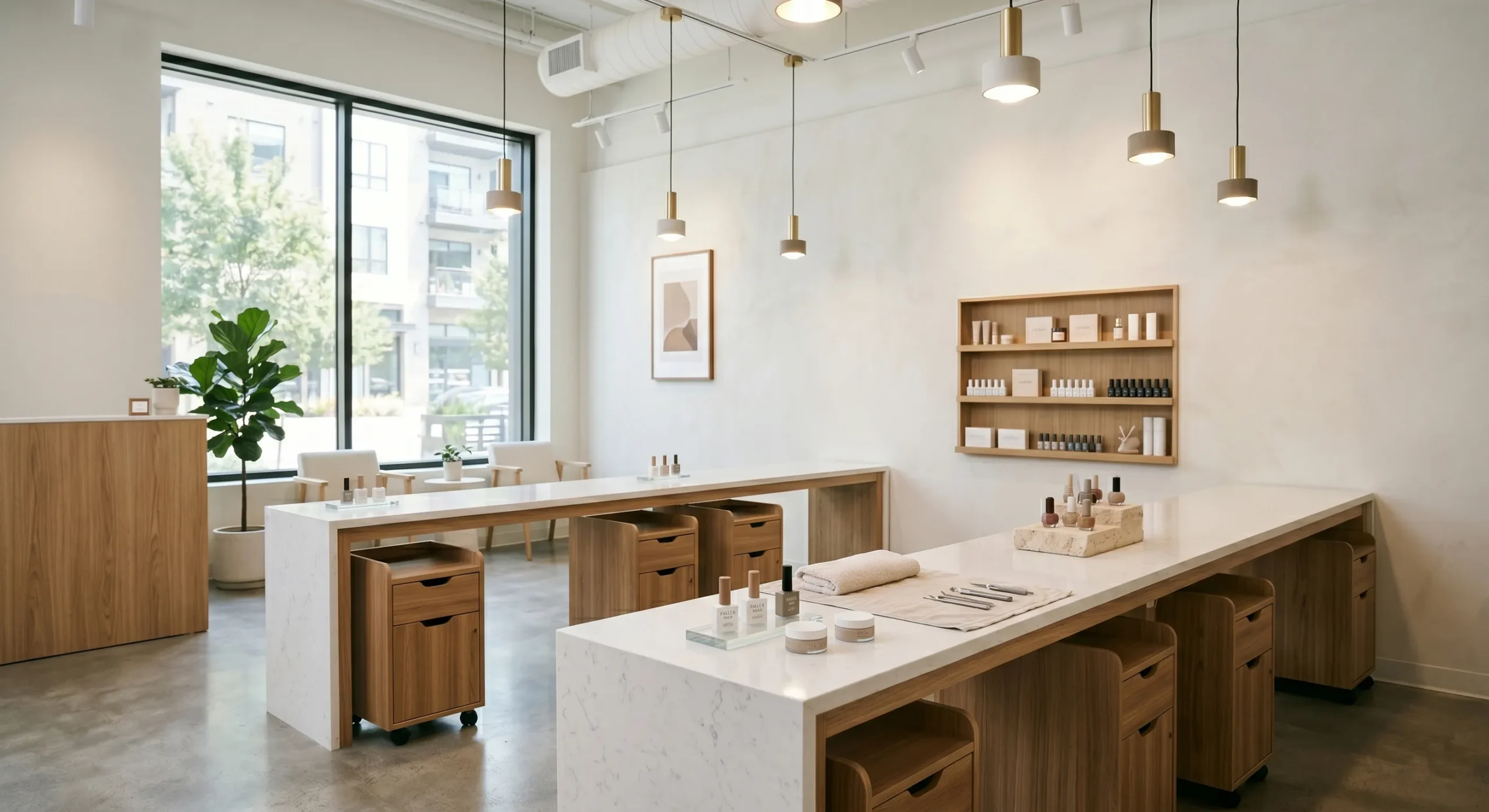
1. The Psychology of Cleanliness: Why White and Wood Persist
In the post-pandemic era of 2026, the “perception of hygiene” remains the single most important factor in client retention. White is the universal color of clinical cleanliness. It reveals a lack of dust and debris, signaling to the client that the salon maintains rigorous sanitation protocols. However, too much white can feel sterile and uninviting.
The Warmth of Light Wood
Light wood (such as white oak, ash, or sustainable birch) balances the clinical starkness of white. It introduces organic texture and warmth, creating what interior designers call “Biophilic Comfort.” According to the American Society of Interior Designers (ASID), environments that incorporate natural elements reduce cortisol levels in occupants, making the salon experience more therapeutic and less transactional.
2. The Nail Table: The Functional Centerpiece of the Aesthetic
In a salon suite, the Nail table is not just a workstation; it is a piece of architectural furniture that must embody the salon’s brand identity. In the white-and-wood design philosophy, the table must serve two masters: visual harmony and industrial durability.
Medical-Grade Antimicrobial Vinyl for Clinical Settings
In 2026, the trend has shifted from standalone desks to integrated “service islands.” A professional Nail table in a modern salon often features a seamless white quartz or high-pressure laminate (HPL) top paired with light wood cabinetry. This combination is preferred in B2B procurement because:
- Reflective Lighting: White surfaces bounce light effectively, which is crucial for the precision work required in gel extensions and intricate nail art.
- Dust Camouflage: While white reveals dirt, light wood grain is surprisingly effective at hiding the fine “micro-dust” that inevitably settles during the filing process.
- Ergonomic Professionalism: Modern workstations now integrate dust extraction systems directly into the wood-veneer cabinets, maintaining the minimalist look without sacrificing air quality.
The Acetone Challenge
One reason why “light wood” remains superior to darker finishes in a B2B context is the visibility of chemical damage. Acetone spills on dark mahogany or walnut finishes create immediate, permanent white rings that look unprofessional. Light wood finishes, especially when treated with industrial-grade UV sealants, are far more forgiving of the daily chemical rigors of a high-volume salon.
3. Market Data: Client Perception vs. Salon Longevity
Recent industry surveys indicate that 64% of luxury salon clients prefer an environment that feels “bright, airy, and natural.” This preference directly correlates with higher “Selfie Value”—the likelihood of a client sharing their experience on social media. In 2026, your salon is not just a service center; it is a content studio. The white-and-wood backdrop provides a neutral, high-key lighting environment that makes hand-focused photography pop.
4. Emerging Challengers: Color Palettes Gaining Traction in 2026
While the white-and-wood combination remains a powerhouse for B2B salon owners, it is no longer the only path to a high-end brand identity. In 2026, we are seeing three distinct “rebel” palettes that challenge the status quo, especially in urban boutique settings.
The “Earth and Clay” Palette
Moving away from the coolness of white, many salons are opting for terracotta, sage green, and warm beige. This “Earth Tone” trend focuses on wellness and grounding. A Nail table in this context might feature a matte-finish stone top with sand-colored wood legs, appealing to clients who seek a more artisanal, less “corporate” spa experience.
The “Techno-Organic” Vibe
Influenced by the rise of “Digital Lavender” and soft metallics, this trend combines light wood with frosted glass and chrome. It targets a younger, tech-savvy demographic that values innovation. Here, the workstation often includes integrated LED light strips and high-tech ventilation systems that are visible rather than hidden, celebrating the “science” of nail care.
The “Moody Noir” Aesthetic
A complete reversal of the white-and-wood trend, this palette uses deep charcoal, navy, and dark walnut. While visually striking, it is a high-maintenance choice. As a B2B operator, you must consider that dark surfaces require more frequent cleaning to hide dust and fingerprints, though they provide a dramatic backdrop for high-contrast nail art photography.
5. Material Science: Comparing Nail Table Surface Durability
In the procurement phase, the aesthetic color of the Nail table is often chosen first, but the material composition is what determines the TCO (Total Cost of Ownership). The following table compares common 2026 salon materials for durability against industry-standard chemicals.
Material Type
Acetone Resistance
UV Stability (Yellowing)
Impact Resistance
2026 Style Grade
High-Pressure Laminate (HPL)
High (Short-term)
Excellent
Moderate
A (Versatile)
Engineered Quartz (White)
Absolute
High
High
A+ (Premium)
Solid Surface (Corian-style)
Moderate (Can dull)
Moderate
Repairable
B (Seamless)
Real Wood Veneer
Low (Risk of rings)
Varies by sealant
Low
S (Luxury/Niche)
6. ROI Analysis: The “Design Dividend”
From a commercial perspective, why does a salon owner invest in a specific color combo? The “Design Dividend” refers to the extra revenue generated by a well-designed space. In 2026, a high-quality Nail table in a white-and-wood setting contributes to ROI in three specific ways:
- Reduced Staff Turnover: Environments that feel “natural” and “bright” improve technician morale. According to industry wellness reports, staff working in biophilic environments (light wood/plants) report 15% lower stress levels, reducing the high cost of therapist recruitment.
- Increased Retail Upsell: A clean, neutral backdrop makes retail products (cuticle oils, hand creams) stand out. When the environment looks professional and organized, clients are 22% more likely to trust the technician’s product recommendations.
- Premium Pricing Power: Clients are willing to pay a “Premium Experience Fee” for a space that looks like a high-end retreat rather than a discount “strip-mall” salon. The white-and-wood aesthetic is the most efficient way to achieve this luxury perception without the maintenance costs of dark or metallic finishes.
“In 2026, the question is no longer just about the color of the furniture, but how that color facilitates the service flow. A white workstation isn’t just a desk; it’s a precision stage for the artist.”
7. Sustainability in B2B Procurement
A final factor keeping the “Light Wood” trend alive is the push for sustainability. B2B buyers are increasingly prioritizing FSC-certified woods and low-VOC laminates. The “natural” look of a light-wood Nail table aligns perfectly with the eco-conscious brand values that today’s consumers demand. Choosing sustainable materials is no longer just ethical—it is a powerful marketing tool that builds long-term brand authority.
8. Maintenance: Keeping the “Day 1” Freshness in a High-Traffic Salon
The greatest risk for the white-and-wood aesthetic is “aesthetic decay.” In a B2B setting, equipment that looks worn or stained immediately devalues the service. To maintain the prestige of your Nail table and overall salon environment, a proactive maintenance protocol is non-negotiable for 2026 operations.
Preventing White Surface Staining
White workstations are prone to staining from high-pigment polishes and specialized gels.
- Immediate Mitigation: Implement a “30-second rule” where technicians must wipe any spill immediately with an acetone-free, pH-neutral cleaner.
- Protective Barriers: Utilize ultra-thin, transparent silicone mats on the work area of the Nail table. These are virtually invisible but provide a 100% liquid-proof barrier for the most vulnerable parts of the desk.
Caring for Light Wood Finishes
Light wood can suffer from “UV yellowing” if exposed to direct sunlight or high-intensity salon lamps.
- UV-Resistant Coatings: When procuring furniture, ensure the wood components are treated with professional-grade UV inhibitors.
- Cleaning Agents: Never use harsh ammonia-based cleaners on wood veneers. Use a damp microfiber cloth with a drop of specialized wood soap to maintain the natural matte luster without stripping the sealant.
9. 2026 B2B Procurement Checklist: The “White and Wood” Decision Matrix
Before you commit to a full salon redesign or equipment purchase, use this technical checklist to ensure your chosen Nail table meets the functional and aesthetic standards of the modern market.
Checklist Item
Requirement Specification
Strategic Goal
Surface Tech
Non-porous Quartz or High-Grade HPL
Acetone resistance and longevity.
HEPA-filter dust extraction (Built-in)
Compliance with air quality regulations.
Cable Management
Internal routing for lamps and e-files
Maintaining the “Minimalist” clean aesthetic.
Ergonomics
Sit-to-stand options or custom height
Technician health and retention.
Sustainability
FSC-Certified wood / Low-VOC finishes
Meeting eco-conscious brand expectations.
10. Conclusion: The Verdict on 2026 Salon Aesthetics
Is white and light wood still the best color combo for nail salons in 2026? The answer is a strategic yes. While “moody” palettes and “techno-organic” vibes are gaining traction in niche markets, the white-and-wood combination remains the most commercially resilient choice for the majority of professional salons. It offers a unique trifecta of benefits: a high perception of hygiene, a psychologically soothing environment, and an adaptable backdrop for digital marketing.
However, the 2026 version of this trend is more sophisticated. It’s not just about the color; it’s about the integration of technology within the Nail table and the commitment to sustainable materials. By focusing on high-durability surfaces and ergonomic excellence, salon owners can ensure that this classic aesthetic continues to pay “design dividends” for another decade.
Frequently Asked Questions (FAQ)
Q: Does a white nail table show more dust than a dark one?
Actually, a dark Nail table often makes fine white nail dust more visible through contrast. A white surface hides the fine dust better between clients, though it requires more attention to pigment stains and liquid spills.
Q: What is the most acetone-resistant white material?
Engineered Quartz is currently the gold standard in the B2B salon industry. It is non-porous and virtually impervious to acetone, making it the most durable choice for white workstations.
Q: How can I make a white and wood salon feel more modern in 2026?
Incorporate “Smart Lighting” and biophilic elements like living walls or high-quality preserved moss. Integrating technology, such as hidden wireless charging pads in the Nail table, also elevates the classic look into a futuristic experience.
Q: Is light wood harder to sanitize than plastic?
If the wood is professionally sealed with a high-performance UV or polyurethane coating, it is just as easy to sanitize as plastic. However, you must use compatible, non-corrosive disinfectants to avoid damaging the finish.