
In the modern wellness and medical aesthetics industry, the transition from manual, static equipment to high-performance technology is no longer a luxury—it is a competitive necessity. As spa owners and clinic directors evaluate their 2026 procurement strategies, a clear trend has emerged: the widespread replacement of traditional massage tables with the advanced electric spa bed. This shift isn’t merely about aesthetics; it’s a data-driven move to enhance operational efficiency, staff retention, and service versatility.
The global spa market is projected to grow significantly as wellness tourism and non-invasive cosmetic procedures increase. To capture this demand, facilities must optimize their “revenue per square foot.” A basic table, while functional for simple massage, acts as a bottleneck for multi-service rooms. This guide explores the technical and economic reasons why upgrading to a professional Spa bed is the single most impactful investment for a growing wellness business.
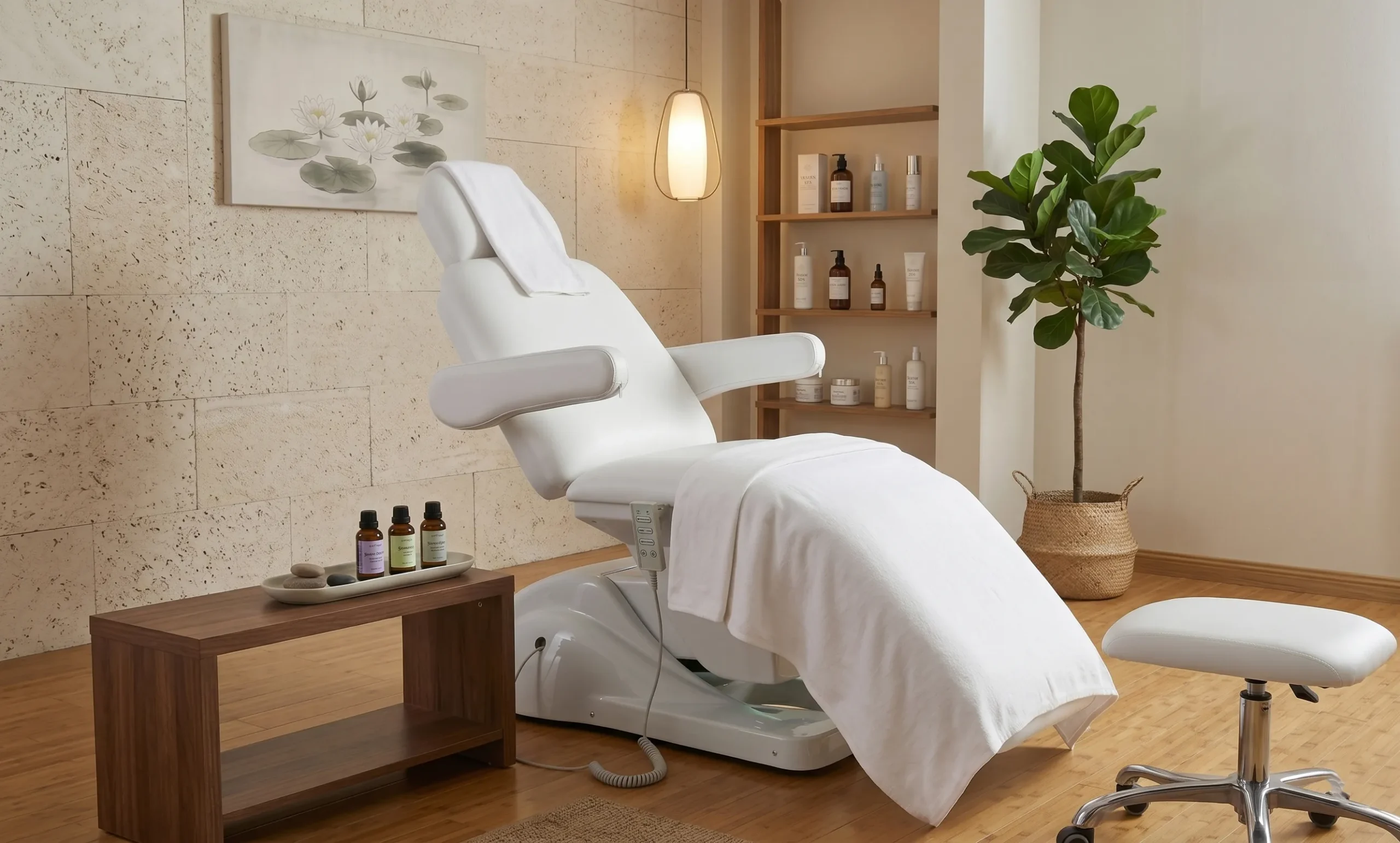
The Ergonomic Imperative: Protecting Your Human Capital
One of the primary drivers behind the upgrade to an electric spa bed is the growing awareness of practitioner health. Unlike basic tables that require manual adjustment—often involving the therapist bending, lifting, or awkward kneeling—motorized systems allow for height and angle modifications at the touch of a button.
Reducing Occupational Injury
According to reports from the Occupational Safety and Health Administration (OSHA), musculoskeletal disorders are a leading cause of burnout in the wellness industry. A static table forces the therapist to adjust their body to the client’s height. In contrast, an electric spa bed allows the practitioner to bring the client to the optimal working height, whether they are standing for a deep tissue massage or sitting for a detailed facial. This ergonomic alignment extends the career longevity of your most valuable assets: your therapists.
Seamless Transitions During Treatments
In a multi-step treatment—such as a body scrub followed by a facial—the height requirements change. Interrupting a client’s relaxation to manually adjust a table is unprofessional and disruptive. The silent linear actuators in a high-quality Spa bed allow for “invisible” adjustments, maintaining the client’s state of ‘zen’ while the practitioner optimizes their working angle.
Elevating the Client Experience: The Silent Luxury
In the premium B2B spa sector, the client’s perception of value is heavily influenced by the physical environment. A basic table often feels utilitarian and “clinical.” A motorized electric spa bed, however, conveys a message of high-end, personalized care.
The “Zero-Gravity” Comfort Factor
Modern electric systems allow for “Trendelenburg” and “Anti-Trendelenburg” positions, which are impossible to achieve on basic tables. These positions allow clients to experience a “zero-gravity” feel, relieving pressure on the lower back and improving circulation. For clients with mobility issues, elderly patrons, or those in the late stages of pregnancy, the ability of a Spa bed to lower to a wheelchair-accessible height is a significant differentiator in service inclusivity.
Silence and Smoothness
Cheap motorized equipment often suffers from “motor whine” or jerky movements. Professional-grade electric spa bed models utilize high-torque, low-noise motors (often certified by CE or UL standards) that glide into position. This smooth transition reinforces the luxury branding of your facility, ensuring that every touchpoint—even the movement of the furniture—feels premium.
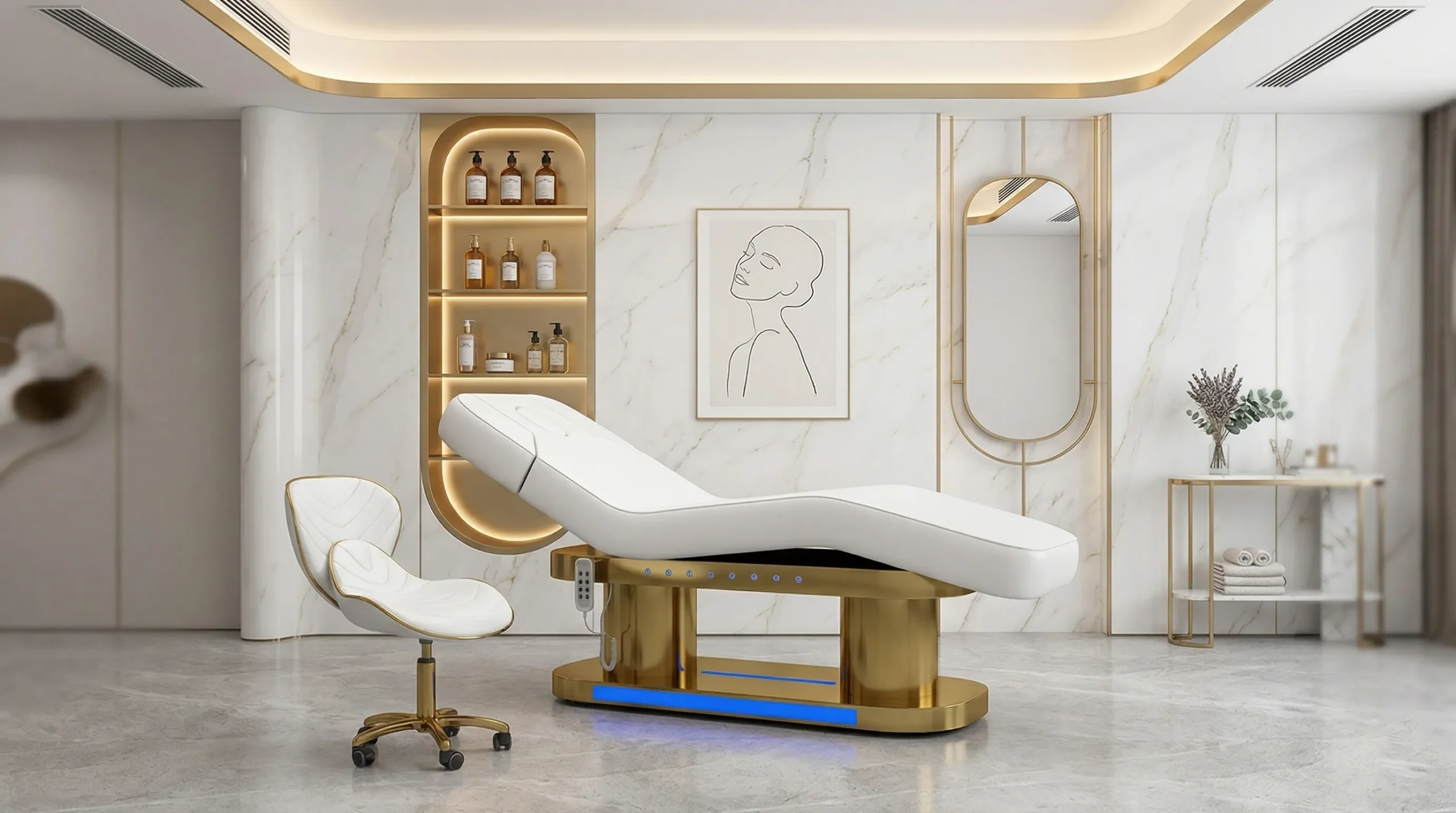
Firmness vs. Plushness: The Multi-Layer Approach
While basic tables often use standard high-density foam that can feel “hard” after 30 minutes, upgraded beds feature multi-layer foam systems, often topped with medical-grade PU leather. This material is not only skin-friendly but also resistant to massage oils and disinfectants, ensuring the bed looks and feels new even after hundreds of sessions.
Operational Efficiency: Maximizing Revenue per Square Foot
For B2B facility managers, every square foot of a treatment room must justify its cost. A basic, non-adjustable table often limits a room to a single service type (e.g., massage only). By upgrading to a high-performance electric spa bed, a salon can transform a “massage room” into a “multi-functional aesthetic suite.”
Rapid Room Turnover
Time is the most expensive commodity in a spa. Manually adjusting a table for different treatments or different client heights takes 3–5 minutes per session. Over a 10-client day, that is nearly an hour of lost billable time. An electric spa bed allows for instantaneous, preset adjustments. Many modern units come with “memory position” remotes, allowing the room to be reset for the next service in seconds.
Diversifying Your Service Menu
Advanced, high-margin treatments such as medical-grade facials, IV therapy, and non-surgical body contouring require specific client positioning that a flat basic table cannot provide.
- The 90-Degree Shift: An electric spa bed can transition from a 180° flat surface to a 90° chair. This is essential for consultations, lash extensions, and injectables where the practitioner needs the client seated upright.
- Medical-Grade Stability: For services involving machinery (like cryotherapy or laser treatments), the bed must be perfectly stable. Motorized frames are significantly heavier and more robust than manual tables, preventing any micro-vibrations that could interfere with precision work.
Comparative Analysis: Basic Tables vs. Professional Electric Spa Beds
To assist in the procurement decision-making process, the following table highlights the technical and commercial differences that impact a spa’s bottom line.
Feature
Basic Massage Table
Professional Electric Spa Bed
ROI Impact
Adjustment System
Manual (Knobs/Pins)
2-4 Linear Actuators (Electric)
Saves 30-50 hours of labor per year.
Positioning Range
Limited (Flat or slight tilt)
Full Range (Height, Back, Leg, Tilt)
Enables 30% more service variety.
Weight Capacity
350 – 450 lbs (Static)
Up to 600 lbs (Lifting Capacity)
Reduces liability and increases inclusivity.
Durability
2 – 4 Years
8 – 12 Years
Lower Total Cost of Ownership (TCO).
Client Retention
Standard/Basic
Premium/Luxury
Higher re-booking rates and premium pricing.
The Technical Engine: Understanding Motor Configurations
In the B2B marketplace, not all electric spa bed models are created equal. The “motor count” is the most accurate indicator of a bed’s versatility and price point.
- 2-Motor Models: Usually control height and backrest. These are excellent entry-level upgrades for basic facials and massage.
- 3-Motor Models: These add control over the leg section. This is the “industry standard” for high-end Spa bed setups, allowing for a “contoured” fit that supports the client’s knees and lower back.
- 4-Motor Models: The ultimate in luxury. The fourth motor controls the “seat tilt” or Trendelenburg position. This is a must-have for med-spas and clinics performing long-duration procedures, as it allows for optimal pressure distribution and practitioner access.
Why Lifting Capacity Matters in 2026
As the wellness industry moves toward more inclusive health standards, the weight-bearing capacity of your equipment is a safety and liability concern. A professional electric spa bed is built with reinforced steel frames and heavy-duty motors designed to lift 400–600 lbs smoothly. This ensures that regardless of the client’s size, the equipment operates safely and without strain, protecting the bed’s internal electronics from premature failure.
Smart Investment: The ROI of an Upgrade
While the initial cost of an electric spa bed is higher than a manual table, the Return on Investment (ROI) is often realized within the first 6–12 months.
- Premium Service Fees: Facilities can often charge 15-20% more for “VIP” rooms equipped with premium motorized furniture.
- Reduced Staff Turnover: Replacing a therapist due to injury or burnout costs a salon significantly more in recruitment and training than the price of a motorized bed.
- Extended Lifespan: A high-quality Spa bed is a 10-year asset, whereas a basic table may need replacement every 3 years due to wear and tear on manual joints and thin upholstery.
Longevity and Maintenance: Protecting Your High-Value Asset
A transition to an electric spa bed represents a significant capital investment. For B2B operators, ensuring the longevity of this equipment is paramount to maintaining a low total cost of ownership. Proper maintenance not only preserves the aesthetic appeal of your treatment rooms but also ensures the safety and mechanical reliability of the motorized components.
Upholstery Care and Sanitation Standards
Modern professional beds are typically upholstered in high-grade PU (polyurethane) leather, which is more durable and eco-friendly than PVC. However, consistent exposure to body oils, salts, and chemical disinfectants can lead to material fatigue.
- Cleaning Protocols: In alignment with CDC disinfection guidelines, always use pH-neutral, non-corrosive cleaners. Avoid high-alcohol-based solutions that can cause the upholstery to dry out and crack.
- Barrier Protection: For high-oil treatments or waxing, utilize specialized Spa bed covers or high-quality disposable linens to provide an extra layer of protection for the foam and leather.
Mechanical and Electrical Integrity
The linear actuators in an electric spa bed are designed for thousands of cycles, but they require a clean environment. Ensure that the under-carriage of the bed is vacuumed regularly to prevent hair and dust from entering the motor housings. Additionally, implement a “cable management” check-up once a month to ensure power cords are not being pinched during height adjustments, which is a common cause of electrical failure in salon settings.
Conclusion: The Future of Spa Operations is Electric
The decision to upgrade from basic tables to a professional electric spa bed is a strategic pivot that addresses the three pillars of a successful wellness business: staff health, client satisfaction, and financial scalability. While a manual table may suffice for a startup on a strict budget, it lacks the ergonomic depth and service versatility required to compete in the premium 2026 wellness market.
By investing in motorized technology, you are not just buying furniture; you are investing in a more efficient workflow, a more inclusive client experience, and a long-term asset that will facilitate your facility’s growth for years to come. In the high-stakes world of B2B wellness, the foundation of your success is the bed your clients lie on.
Frequently Asked Questions (FAQ)
Q: Does an electric spa bed consume a lot of electricity?
Surprisingly, no. Modern electric spa bed motors only consume power during the actual movement of the bed. When stationary, the power draw is negligible, making them a highly energy-efficient choice for busy salons.
Q: Are electric beds harder to move than portable tables?
Yes, electric beds are significantly heavier (often weighing 150-250 lbs) due to their steel frames and motors. They are designed for permanent installation in treatment rooms, offering superior stability compared to portable options.
Q: Is the noise of the motor disruptive to the spa environment?
High-end electric spa bed models are specifically engineered for the wellness industry and operate at a decibel level similar to a whisper. If maintained properly, the motor sound is virtually unnoticeable to the client.
Q: How many motors do I really need for a standard facial?
For most facial services, a 2-motor or 3-motor Spa bed is sufficient, allowing you to control the height and the backrest angle. A 4-motor bed is usually reserved for advanced med-spa treatments or high-end luxury suites.