
In the professional nail care and wellness industry, the pedicure chair is more than just a piece of furniture—it is the functional centerpiece of your service delivery and a primary driver of client satisfaction. For a salon owner, selecting the right model is a high-stakes capital investment that dictates operational efficiency, sanitation standards, and long-term profitability.
As the “self-care” economy continues to evolve in 2026, clients are no longer satisfied with a simple foot soak. They demand a multi-sensory experience that combines ergonomic luxury with medical-grade hygiene. This comprehensive guide breaks down the technical specifications, architectural requirements, and business logic you need to master before signing off on your next major equipment purchase.
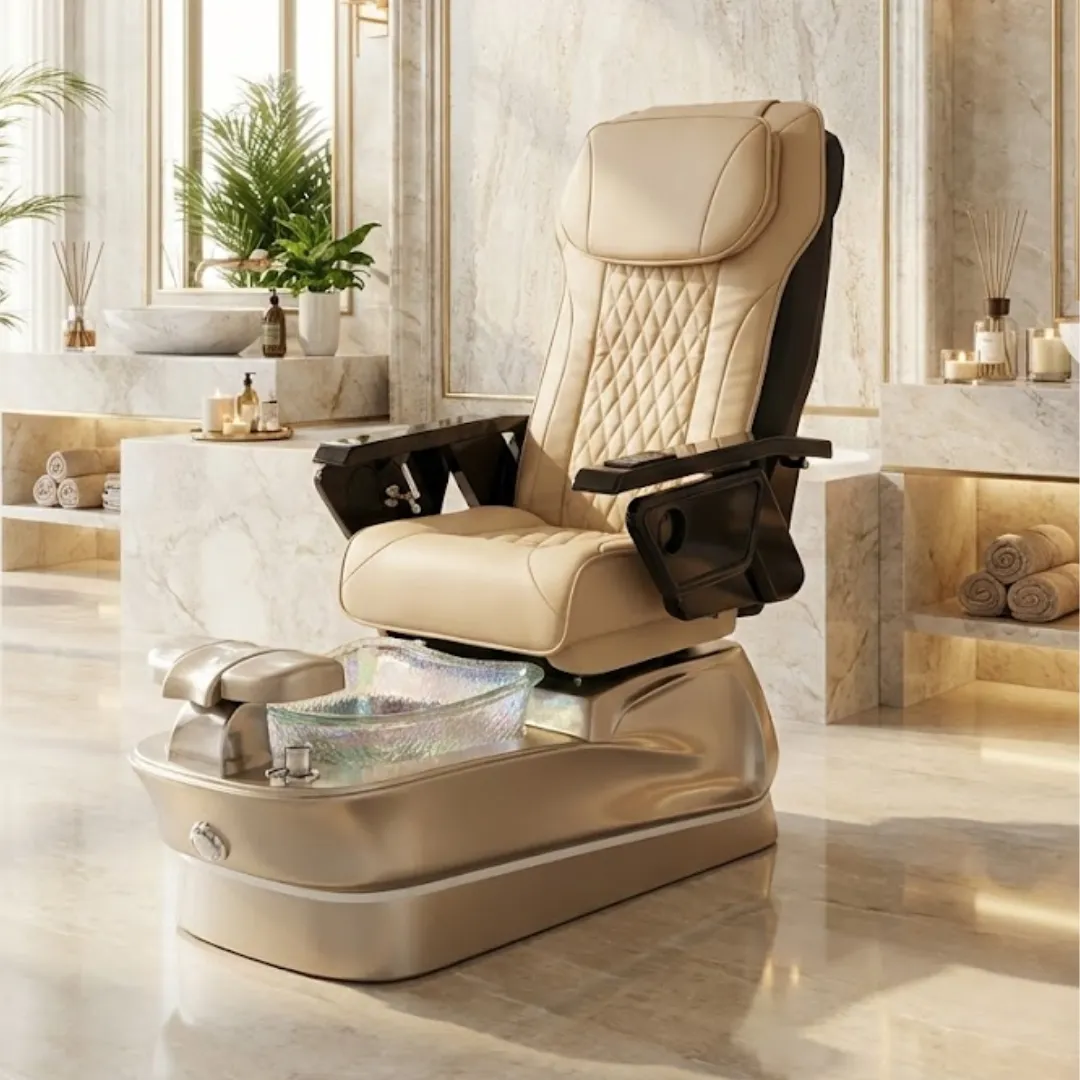
The Infrastructure Foundation: Plumbed vs. Plumb-Free
The most critical decision in your procurement journey begins beneath the floorboards. The infrastructure of your salon space will largely dictate which type of pedicure chair you can realistically install. In the B2B sector, we categorize these into two main architectures.
Plumbed-In Pedicure Chairs: The Industry Standard
Plumbed units are permanently connected to your building’s water supply and drainage system. These are ideal for high-volume salons that prioritize a seamless, automated workflow.
- Pros: Automatic filling and draining save significant technician time; often features high-end aesthetics.
- Cons: Requires expensive professional plumbing installation; fixed location makes salon reconfiguration difficult.
Plumb-Free (Portable) Pedicure Chairs: Flexibility and Agility
For boutique suites, historical buildings where plumbing is restricted, or “dry” spas, a plumb-free pedicure chair offers a versatile solution. These units utilize internal tanks or removable basins that the technician fills and empties manually.
- Pros: Zero installation costs; mobility allows for flexible room layouts; ideal for medical-pedicure setups.
- Cons: Higher labor intensity for staff; limited automated features.
The Pipeless Revolution: Prioritizing Sanitation and Compliance
One of the most significant advancements in salon furniture technology is the move toward “Pipeless” systems. According to the National Interstate Council of State Boards of Cosmetology (NIC), improper sanitation in foot baths is the leading cause of health violations in nail salons.
What is a Pipeless Pedicure Chair?
Traditional chairs used internal pipes to circulate water, which often became breeding grounds for bacteria, skin cells, and biofilm. A modern pedicure chair utilizes pipeless technology—typically a small, removable jet or “whirlpool” motor that sits directly in the bowl.
- Hyper-Hygiene: Since there are no internal pipes, there is nowhere for debris to hide.
- Ease of Cleaning: The magnetic jet can be detached and sanitized in hospital-grade disinfectant within seconds between clients.
- Compliance: Pipeless systems significantly reduce the risk of cross-contamination, ensuring your salon meets 2026’s stringent health department standards.
Disposable Liner Systems
For salons aiming for the highest tier of “Clean Beauty” certification, look for a pedicure chair that is compatible with disposable liners. This adds an extra layer of protection, signaling to your premium clientele that their safety is your absolute priority.
Shiatsu Massage Technology: The Silent Upsell
A pedicure is a 45-to-90-minute procedure. During this time, the chair’s massage function acts as a “silent therapist,” directly impacting whether a client re-books. In B2B procurement, we differentiate between basic vibration and full “Human-Touch” Shiatsu massage.
High-end models now incorporate multi-directional rollers that mimic the kneading, tapping, and rolling techniques of a professional masseuse. When testing a pedicure chair, ensure the remote control is intuitive and offers “auto-programs” that allow the client to customize their experience without interrupting the nail technician’s work.
Ergonomics: Balancing Client Comfort and Technician Health
In the B2B salon industry, ergonomics is often viewed through the lens of client comfort, but for a business owner, it is equally about protecting the health of your staff. A poorly designed pedicure chair can lead to chronic back pain for technicians, resulting in increased sick leave and high staff turnover.
Client Accessibility and Ease of Entry
As the demographic of spa-goers diversifies, accessibility has become a legal and ethical priority. Look for chairs with:
- Swivel Seats: Allows clients to sit down and rotate into position, which is essential for elderly clients or those with limited mobility.
- Adjustable Armrests: These should lift up to provide an unobstructed entry point.
- ADA Compliance: In the United States, following Americans with Disabilities Act (ADA) standards for equipment accessibility is not just good practice—it’s often a requirement for commercial insurance and licensing.
Technician-Centric Design
The technician spends 8–10 hours a day hunched over the footrest. To mitigate Work-Related Musculoskeletal Disorders (WMSDs), ensure the pedicure chair offers:
- Adjustable Footrests: These should be height-adjustable to bring the client’s foot to the technician’s natural chest level, preventing excessive spinal flexion.
- Leg Support: Specialized “calf support” cushions reduce the strain on the technician’s arms during the scrubbing and massage portions of the service.
Material Durability: The Acetone-Resistancy Factor
The salon environment is chemically aggressive. Harsh solvents like acetone and disinfectants can ruin a $5,000 investment in months if the materials are not industrial-grade. When evaluating a pedicure chair, look closely at the “Skin” and the “Bowl.”
Upholstery: PU Leather vs. PVC
In 2026, the gold standard for salon furniture is high-grade **PU (Polyurethane) leather**. Unlike cheaper PVC, high-quality PU is:
- Acetone-Resistant: It won’t peel or “bubble” when accidental spills occur.
- Breathable: Enhances client comfort during long sessions.
- Antimicrobial: Many professional-grade fabrics now include silver-ion coatings to prevent fungal growth.
The Basin: Glass, Acrylic, or Resin?
Bowl Material
Durability Level
Aesthetic Appeal
B2B Recommendation
Acrylic
Moderate (Can scratch)
High (Lightweight)
Best for mid-range, high-volume salons.
Tempered Glass
High (Heat resistant)
Luxury (LED lighting effects)
Ideal for high-end boutique spas.
Stone Resin
Extreme (Solid surface)
Contemporary/Minimalist
Best for heavy-duty, long-term installations.
Strategic ROI: The Business Logic of Upgrading
From a financial perspective, a pedicure chair should be viewed as a revenue-generating asset rather than a sunk cost. The “Price Per Service” can be directly correlated to the quality of the equipment.
Market data suggests that salons upgrading from basic, non-massage chairs to premium, pipeless Shiatsu models can increase their service menu prices by an average of 15-25% without losing client volume.
Furthermore, the reduction in maintenance costs—specifically the plumbing repairs associated with old-fashioned piped systems—contributes significantly to the Net Operating Income (NOI). When calculating your ROI, factor in the “Down Time” cost. A chair that breaks down once a month costs you not just the repair fee, but 10–15 lost appointments.
Integrated Technology: Venting and Ventilation
With increasing regulations regarding air quality in nail salons, many modern chairs now feature integrated ventilation systems. These systems pull chemical fumes and dust directly from the foot zone, filtering them before they reach the technician’s breathing zone. This technology is becoming a mandatory requirement in several jurisdictions to meet 2026 OSHA safety standards.
Maintenance and Longevity: Protecting Your High-Value Asset
In the B2B world, the “Total Cost of Ownership” (TCO) is just as important as the initial purchase price. A premium pedicure chair should be a 10-year asset, but without a proactive maintenance schedule, mechanical failures can lead to significant revenue loss. Implementing a “Preventative Maintenance Program” is essential for any high-traffic salon.
Daily and Weekly Sanitation Protocols
Beyond the hygiene requirements for client safety, proper cleaning extends the life of the chair’s mechanical parts.
- Magnetic Jet Care: If using a pipeless system, the magnetic impeller should be removed and cleaned daily to prevent hair and debris from straining the motor.
- Upholstery Conditioning: While PU leather is acetone-resistant, it should be wiped down with a specialized leather conditioner weekly to maintain its elasticity and prevent cracking under UV salon lighting.
- Filter Checks: For chairs with integrated ventilation, filters should be checked weekly and replaced according to the manufacturer’s schedule to ensure optimal air quality.
Annual Professional Inspection
Establish a relationship with a certified technician to perform an annual “mechanical audit.” This includes checking the tension of the massage rollers, inspecting the water intake valves for mineral buildup (especially in hard-water areas), and ensuring the electrical grounding remains intact. According to industry best practices from the Professional Beauty Association (PBA), regularly serviced equipment can last up to 40% longer than neglected units.
B2B Procurement Checklist: The Final Decision Matrix
Before you finalize your purchase of a pedicure chair, use this checklist to ensure the model aligns with your operational reality and business goals.
- Infrastructure: Is your flooring and plumbing ready for a plumbed-in unit, or do you need the flexibility of a portable basin?
- Electrical Load: Does your salon’s electrical panel support the combined wattage of multiple motorized chairs and massage systems?
- Dimensions: Have you calculated the “full recline” footprint? Ensure there is at least 18-24 inches of clearance between chairs for technician movement.
- Warranty Coverage: Does the manufacturer offer at least a 2-year warranty on the motor and a lifetime warranty on the structural frame?
- After-Sales Support: Does the vendor provide local technical support and a ready supply of replacement parts (jets, remotes, cushions)?
Conclusion: Investing in the Foundation of Salon Excellence
Choosing the right pedicure chair is a multi-dimensional decision that balances high-tech sanitation, ergonomic precision, and brand aesthetics. In the competitive 2026 landscape, the right equipment acts as a force multiplier—it enhances the efficiency of your staff, elevates the perceived value of your services, and ensures the long-term safety of your clients. By prioritizing pipeless technology, acetone-resistant materials, and ergonomic support, you are not just buying a chair; you are building a resilient and profitable foundation for your salon’s future.
Frequently Asked Questions (FAQ)
Q: How long should a professional pedicure chair last?
A high-quality pedicure chair from a reputable manufacturer typically lasts between 7 to 10 years with proper maintenance. Lower-end models may begin to show mechanical or upholstery wear within 3 years of heavy commercial use.
Q: Do I need a licensed plumber to install a pedicure chair?
For plumbed-in units, yes. Most jurisdictions require a licensed plumber to ensure compliance with local building codes and to prevent backflow issues. Portable (plumb-free) units generally do not require professional installation.
Q: What is the difference between pipeless and piped systems?
Piped systems use internal plumbing to circulate water, which can trap bacteria. Pipeless systems use a detachable magnetic motor that sits in the bowl, making them significantly easier to sanitize and more hygienic for the client.
Q: Can I customize the color of my pedicure chair?
Offer customizable upholstery and basin colors to match your salon’s brand identity. However, custom orders often have a longer lead time (4-12 weeks) compared to stock colors like black or cream.